Habit Tracker Guide: What Is Habit Tracking and How to Stay Consistent

7

Most people don’t fail because they lack goals; they fail because their daily behavior is invisible.
You decide to exercise more, read regularly, focus better, or improve your work habits. A few days go well. Then life becomes busy, routines break, and the intention fades. The issue is rarely motivation. It is the absence of a system that keeps behavior visible, measurable, and repeatable.
That system is a habit tracker.
A habit tracker is not just a checklist. It is a feedback loop that helps you see patterns, reinforce consistency, and connect small daily actions to long-term change. When used correctly, it turns discipline from an emotional matter into a structural one.
This guide explains how habit tracking works, why it is effective, and how to use it to build habits that actually last.
At a Glance
Habit tracking works by increasing behavior awareness, not pressure
Small, repeatable actions create more change than intense bursts
Consistency grows from systems, not motivation
Visual progress reinforces behavioral loops
Structured planning tools like Akiflow help protect time for habit-related behaviors inside real work schedules
What Is a Habit Tracker?
A habit tracker is a system for recording whether a specific behavior was completed. It can be as simple as marking an “X” on a calendar or as advanced as using a digital planning tool with reminders and analytics.
The purpose is not perfection. The purpose is visibility.
A to-do list asks, What must I finish today?
A habit tracker asks, Who am I becoming through repeated behavior?
Habits shape identity. Tracking habits gives you proof of progress. That proof is often what keeps behavior going long after initial enthusiasm fades.
Why Habit Tracking Works?
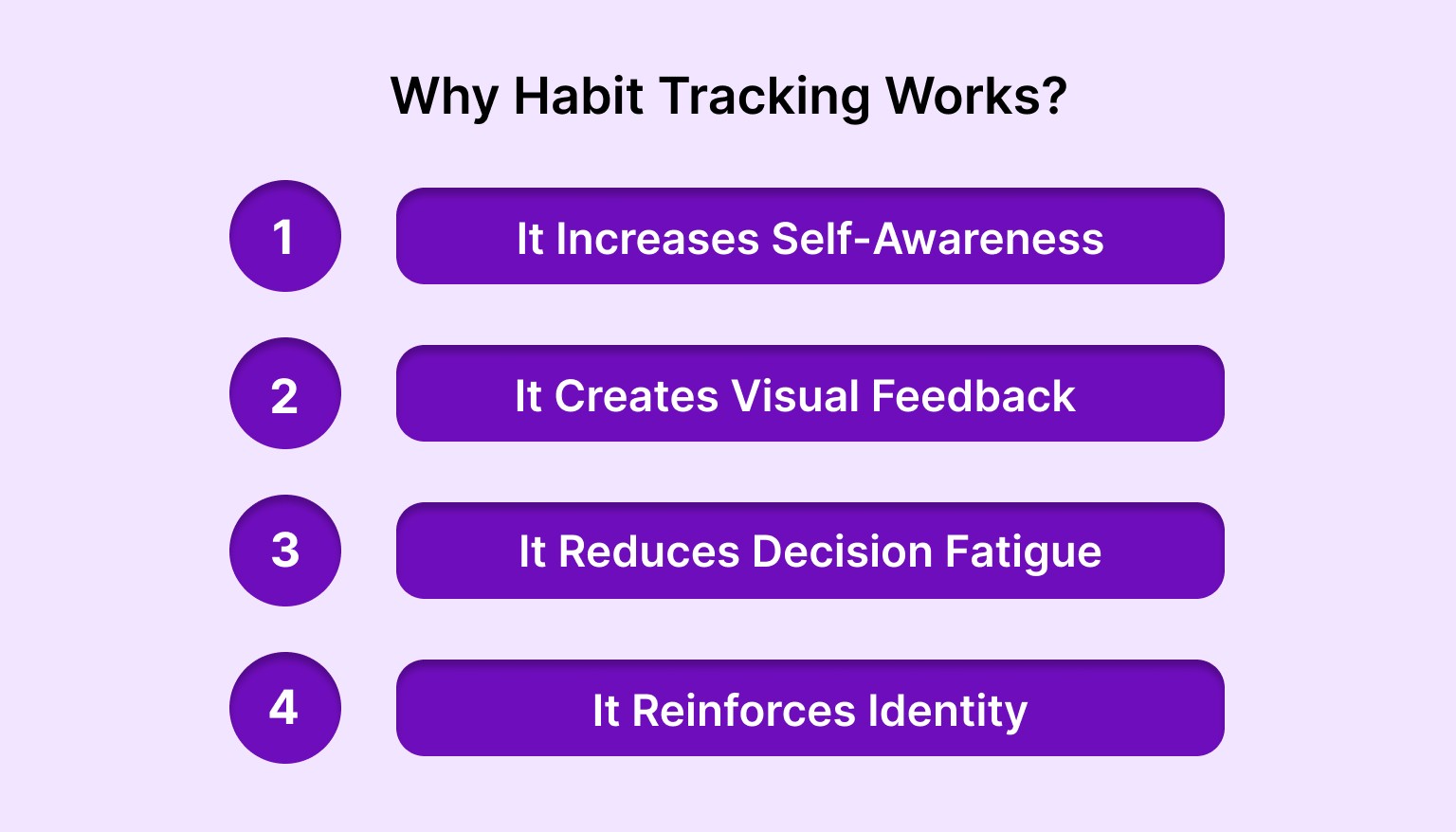
Habit tracking is powerful because it changes how your brain relates to behavior.
1. It Increases Self-Awareness
Without tracking, you rely on memory and feelings. Those are unreliable. You may believe you “haven’t been consistent,” when data shows you’ve improved, or the opposite.
Tracking replaces guesswork with patterns.
2. It Creates Visual Feedback
Humans respond strongly to visual progress. Seeing a growing chain of completed days triggers satisfaction and momentum. You are less likely to break a streak you can see.
3. It Reduces Decision Fatigue
When behavior becomes habitual, you stop negotiating with yourself. Tracking reinforces the behavior loop:
Cue → Action → Completion → Record → Reinforcement
4. It Reinforces Identity
Every time you log a habit, you reinforce identity-based thinking:
You are not trying to read; you are someone who reads.
You are not trying to plan; you are someone who plans daily.
This shift is crucial for long-term consistency.
Also Read: 10+ Daily Activities That Improve Productivity and Focus in 2026
Types of Habit Trackers
A habit tracker is not defined by the format you use, but by how well it supports behavioral consistency, visibility, and review. Different tracking systems serve different cognitive styles, work environments, and levels of structure.
The key distinction is not digital versus paper, but whether the system integrates smoothly into your existing routines and planning methods.
Let’s look at the main categories and how they function in practice.
Tracker Type | Core Strength | Best Suited For | Key Advantage | Main Limitation |
|---|---|---|---|---|
Paper-Based Trackers | Mindful, intentional recording | Personal development habits such as journaling, gratitude, reflection, or reading | Writing habits manually increases awareness and makes tracking part of the behavioral ritual | No reminders, data insights, or integration with professional schedules |
Spreadsheet Trackers | Analytical tracking and pattern visibility | Performance-driven habits like fitness metrics, learning progress, or productivity tracking | Allows detailed tracking of frequency, streaks, and trends over time | Manual entry creates friction; it can feel like administrative work rather than behavioral support |
Habit Tracker Applications | Ease of use and automated reminders | Daily routine habits such as hydration, exercise, reading, or meditation | Notifications and visual streaks improve consistency and reduce friction | Often disconnected from work calendars, making time protection difficult |
Integrated Planning Systems | Behavior scheduling and workflow alignment | Habits that must coexist with professional responsibilities | Treats habits as scheduled commitments within the calendar, improving follow-through | Requires structured planning discipline; not purely habit-focused tools |
Example of an Integrated System | Calendar-task-habit integration | Professionals balancing work priorities and personal development | Tools like Akiflow allow time for habit-related behaviors to be blocked alongside meetings and tasks | Effectiveness depends on active weekly planning and review |
Must read: The Science of Blocking Time: A Smarter Way to Work
How to Start Using a Habit Tracker?
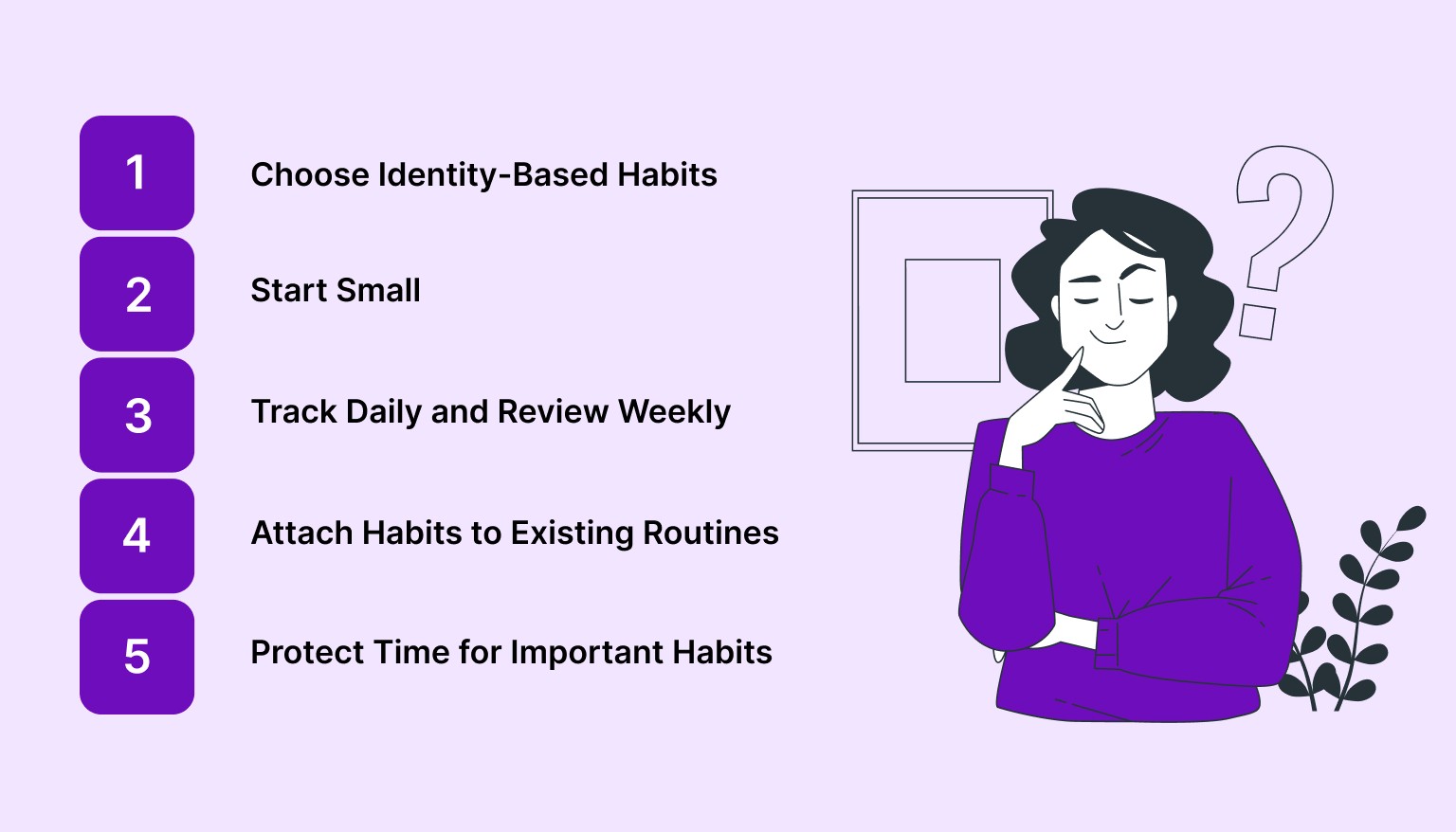
Habit tracking becomes effective only when habits are chosen deliberately, kept manageable, and supported by a review system. Many people fail not because tracking is ineffective, but because they overload themselves, track outcomes instead of behaviors, or rely on memory rather than structure.
Starting correctly means designing habits that are realistic, identity-based, and embedded into existing routines.
Here is the step-by-step approach.
Step 1: Choose Identity-Based Habits
Habits should reflect the type of person you want to become, not just goals you want to achieve. Instead of tracking weight loss, track daily movement. Instead of tracking “finish book,” track daily reading. Identity-driven habits are more sustainable because they shift focus from results to behavior.
Step 2: Start Small
Small habits reduce psychological resistance and improve consistency. Behavioral change depends more on frequency than intensity. A short, repeatable action performed daily builds automaticity faster than an ambitious habit done inconsistently.
Step 3: Track Daily and Review Weekly
Daily tracking builds awareness. Weekly reviews build insight. During review, look for patterns: which habits are easy, which face resistance, and which times of day support completion. Review converts tracking into learning.
Step 4: Attach Habits to Existing Routines
Habit stacking increases adherence by linking new behaviors to established ones. For example, after morning coffee, read for five minutes. After finishing work, plan tomorrow’s priorities. Anchoring reduces reliance on motivation.
Step 5: Protect Time for Important Habits
Habits fail when they depend on leftover time. Scheduling habit blocks increases follow-through. Structured planning systems such as Akiflow help convert habit intentions into calendar commitments, ensuring these behaviors coexist with work demands.
Common Mistakes in Habit Tracking
Habit tracking fails when it becomes overwhelming, unrealistic, or disconnected from review. The problem is rarely the tracker itself; it is how it is used.
Many people turn habit tracking into a performance metric instead of a behavioral support system. Recognizing common mistakes allows you to adjust before motivation declines.
Here are the most frequent pitfalls.
Tracking too many habits simultaneously, which dilutes focus
Treating a missed day as a failure rather than a normal disruption
Tracking outcomes instead of behaviors
Treating habits like tasks to finish instead of routines to repeat
Failing to review patterns and adjust difficulty
Habit tracking should guide direction, not enforce perfection.
How to Stay Consistent?
Consistency emerges from environment design and structured planning, not from willpower. The more habits are visible, scheduled, and linked to routine triggers, the less cognitive effort they require. The goal is to reduce behavioral friction so habits occur automatically within the week’s structure.
Let’s look at consistency strategies.
Use visual streaks to reinforce progress
Expect disruptions and resume quickly
Follow the “never miss twice” rule
Adjust habits when life circumstances change
When habits are integrated into weekly planning, adherence improves. Workflow systems like Akiflow help align time blocks for habit-related behaviors with calendar commitments, reducing reliance on motivation alone.
Habit Tracker Examples
Habit tracking becomes more effective when habits are chosen according to life domains. Different goals require different behavioral rhythms. Categorizing habits helps ensure balance across productivity, health, learning, and mindset.
Here are common habit categories.
Productivity Habits: Daily planning, deep work sessions, weekly reviews
Health Habits: Walking, hydration, sleep routines
Learning Habits: Reading, skill practice, reflection
Mindset Habits: Journaling, gratitude, meditation
Choosing the Right Habit Tracking Tool
The most effective habit tracking system is one that fits naturally into your workflow and reduces behavioral friction. The goal is not complexity but consistent use.
Tools should support visibility, reminders, and review while integrating smoothly with existing planning routines, especially for professionals managing both work and personal development habits.
Key features to evaluate:
Simple daily logging process
Clear visual progress indicators
Reminder functionality
Support for weekly review
Calendar integration
For professionals balancing responsibilities, structured planning tools that align habit-related behaviors with daily schedules can help ensure they receive protected time within real workweeks.
Conclusion
A habit tracker is not a productivity accessory; it is a behavioral feedback system. It turns invisible actions into measurable patterns and replaces reliance on motivation with structured awareness. When habits are small, identity-driven, and consistently reviewed, they shift from effortful tasks to automatic routines that support long-term growth.
Lasting change does not come from intensity but from repeatability. A well-designed habit tracking system helps you align daily behavior with long-term direction, ensuring that progress is not accidental but built through deliberate structure.
Start using Akiflow to centralize your tasks and block dedicated time for key behaviors alongside your calendar, so your most important actions actually get done.
FAQs
1. How do I choose which habits to track?
Focus on habits that shape identity and create long-term impact, such as daily planning, movement, or learning. Prioritize behaviors that, if repeated consistently, would meaningfully change your routines.
2. How many habits should I track at once?
Start with 3–5 habits. Tracking too many things reduces focus and increases friction, often leading to inconsistency rather than progress.
3. What should I do if I miss a day in my habit tracker?
Treat it as normal, not failure. Resume the next day and follow the “never miss twice” principle to maintain behavioral direction.
4. Can habit tracking help with professional productivity?
Yes. Tracking habits like daily planning, deep work blocks, or weekly reviews improves consistency and work structure, especially when habits are scheduled alongside tasks.
5. What makes a habit tracking system sustainable long term?long-term
Sustainability comes from low friction, visible progress, and regular review. Systems that align habits with your calendar and workload make consistency easier than relying on motivation alone.


