
In 2026, productivity and focus are about more than squeezing more work into your day. They are about creating structure, reducing noise, and designing routines that help you do your best work with less friction. In a world where interruptions are constant and expectations are high, practical daily activities give you clarity and control.
Work today is filled with overlapping meetings, digital distractions, and back-to-back task requests. According to a recent productivity study, nearly 90 percent of working Americans are distracted at least once every day, and almost one in four people experience more than six interruptions each day.
After checking communication channels such as email or Slack, it takes over 23 minutes to regain focus on your core task. These patterns quietly erode productivity and reduce the quality of your work. That is why cultivating focused, intentional daily habits matters. In this blog, we break down actions you can take every day to strengthen your focus, make your schedule work for you, and stay productive without feeling overwhelmed.
Key Takeaways
Productivity improves when you plan, prioritize, and protect your focus time.
Intentional daily habits help reduce digital interruptions and decision fatigue.
Small routine shifts compound over time into major productivity gains.
Regular reflection and adjustments keep you aligned with your goals.
Tools like Akiflow help you merge task management with planning to reduce cognitive load.
Daily Activities That Improve Productivity and Focus
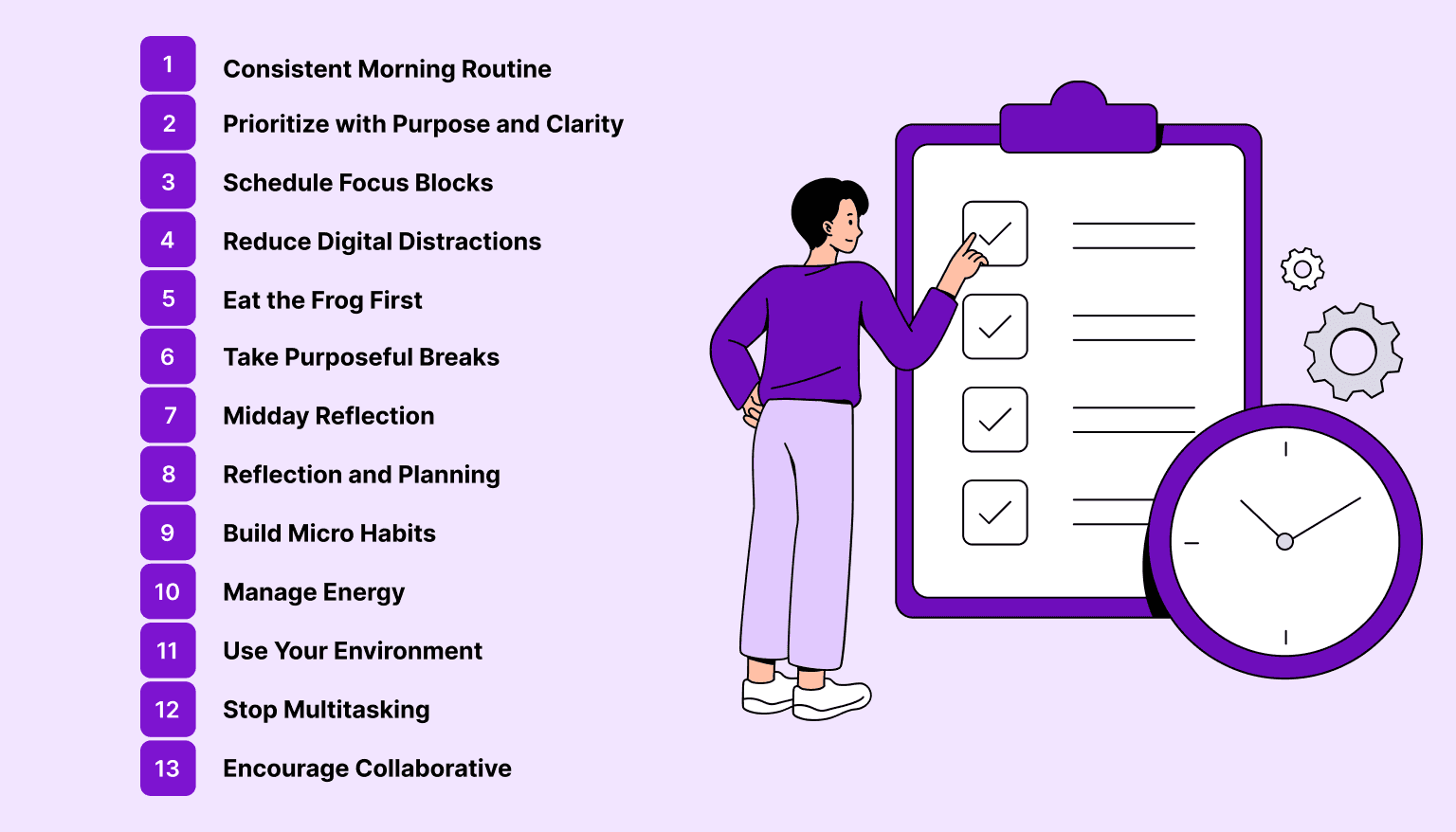
1. Establish a Consistent Morning Routine
The way you start your day sets the tone for the hours that follow. Rushing into tasks without a plan leads to reactive work, where you respond to whatever lands in your inbox next. A calm morning routine gives you control from the outset.
Actionable Steps
Wake up at a consistent time to build rhythm.
Spend a few minutes reviewing your top three priorities before digital tools.
Add a physical movement or mindfulness activity to energize your mind.
Example: Avoid checking email for the first 30 minutes. Instead, review your key priorities, then jump into your first focus block.
2. Prioritize with Purpose and Clarity
Every day must start with intention. Not all tasks are equal; some will have a greater impact on your productivity and progress toward goals.
Actionable Steps
Use simple priority labels like “High,” “Medium,” and “Low.”
Choose two high-priority items each morning and schedule them early.
Revisit your priorities midday to stay on track.
Example: Block your hardest tasks when you are most alert, such as first thing in the morning or after lunch.
3. Schedule Focus Blocks for Deep Work
Constant context switching is one of the biggest drains on productivity. When you interrupt your focus, it takes time to regain your groove. By dedicating blocks of time for uninterrupted work, you reduce this drag and increase the quality of your output.
Actionable Steps
Schedule blocks of 60 to 90 minutes for important tasks.
Treat these blocks as commitments with no interruptions.
Communicate your focus times to your team.
Example: Block time each day for focused work before your meetings begin. Use tools like Akiflow to sync these blocks with your calendar and task list.
4. Reduce Digital Distractions
Digital tools are essential, but they also compete for your attention. Notifications, instant messages, and email pings fragment your focus and slow you down.
Actionable Steps
Turn off non-essential notifications during focus periods.
Establish windows to check communication tools instead of constant monitoring.
Close unrelated tabs and apps during focused work.
After checking communication tools such as Slack or email, a person takes over 23 minutes to regain focus on the original task.
Example: Set your email to deliver notifications only three times a day and avoid checking it outside those windows.
5. Eat the Frog First
“Eat the frog” is a metaphor for tackling your most challenging or important task early in the day. Doing this prevents procrastination and helps you make progress on what matters most.
Actionable Steps
Identify the task that will have the biggest impact on your goals.
Break it into smaller steps if needed.
Complete it before exploring less critical tasks.
Example: If completing a project plan is vital today, schedule it first thing and honor that time.
6. Take Purposeful Breaks
Rest is not the enemy of productivity. Short breaks replenish your mental energy and help maintain focus throughout the day.
Actionable Steps
After each focus block, take a 5 to 15-minute activity break.
Stand up, stretch, get fresh air, or hydrate.
Use breaks to reset instead of keeping your mind on work.
Example: After a long focus session, step away from your desk entirely to refresh.
7. Midday Reflection and Adjustment
Even the best daily plan can get disrupted. Midday check-ins help you adjust your plan based on real progress.
Actionable Steps
Every afternoon, take a few minutes to reflect on what has been done and what needs time tomorrow.
Adjust your schedule and priorities accordingly.
Use your planning tool to reassign tasks or shift focus blocks.
Example: If a meeting ran overtime and reduced your focus time, shift remaining priorities to later blocks rather than letting them slide.
Must read: 10 Strategies for Mastering Time Management
8. End Each Day with Reflection and Planning
Your day should have a full stop. A brief end-of-day review helps you complete unfinished tasks, capture new ones, and prepare for tomorrow.
Actionable Steps
Review what you completed and what you didn’t.
Capture any new tasks or ideas that came up during the day.
Block time tomorrow for the highest priority items.
Example: Spend 10 minutes closing out your planning tool and calendar for a clean start tomorrow.
9. Build Micro Habits That Improve Focus
In addition to major routines, micro habits improve productivity behind the scenes. Small changes become significant over time.
Actionable Steps
Start with one habit for a week before adding another.
Use visual cues or reminders to reinforce habits.
Track your consistency for motivation.
Useful Micro Habits
Make your bed every morning to start with a small win.
Use a physical journal or note app to capture ideas instantly.
Practice a brief breathing exercise before heavy-focus blocks.
10. Manage Energy, Not Just Time
Focus and productivity are also tied to your energy levels throughout the day. Understanding when you are most alert allows you to assign work accordingly.
Actionable Steps
Identify your peak energy periods and reserve them for strategic work.
Do simpler or administrative tasks during energy dips.
Adjust your daily routine to fit your natural rhythm.
Example: If you are most productive mid-morning, schedule your top priority tasks then.
11. Use Your Environment to Support Focus
Your physical and digital environments can either support or hinder your productivity. A conscious setup fosters better focus.
Actionable Steps
Keep your workspace clear of clutter.
Use noise-cancelling headphones if ambient noise distracts you.
Maintain a simple desktop setup with only essential apps open.
Example: A clean desk at the start of your day helps your mind feel organized and ready.
12. Stop Multitasking and Focus on One Thing at a Time
Multitasking feels productive but undermines execution quality and increases the time required to complete meaningful work. By working on one thing at a time, you get better results with less effort.
Actionable Steps
When you start a task, complete it or reach a meaningful stopping point.
Avoid switching between tasks unless necessary.
Use your task tool to mark progress and reduce task switching.
Frequent task switching can reduce overall performance and increase the time required to complete each task.
13. Encourage Collaborative Focus With Your Team
Focus is not only individual. Working with your team to create shared expectations around focus time can improve collective productivity.
Actionable Steps
Set team-wide “quiet hours” for uninterrupted focus.
Agree on meeting-free blocks in your shared calendars.
Encourage short status updates instead of long meetings.
Example: A team may block daily focus time from 10:30 to 11:30 so everyone can work without disruption.
Why These Activities Matter Today?
Modern work environments are full of noise. According to research, interruptions from digital communication and frequent task switching can severely impair focus and significantly extend task completion time.
When distractions and chaotic scheduling become normal, productivity declines, stress rises, and even strong performers struggle to maintain consistent momentum.
Intentional daily activities help you build habits where structure replaces chaos. They help you work with purpose and reduce friction from constant interruptions.
Also read: Time Management Plan: 6 Strategies To Improve Productivity
How Productivity Tools Help You Stay Focused?
You can create all the plans you want, but without systems to support them, keeping habits is hard.
Tools like Akiflow help you centralize your tasks and calendar in one dashboard. Instead of managing separate lists and apps, Akiflow brings your planning and execution into one place. This makes it easier to block focus time, track priorities, and stick to daily habits that improve productivity.
Akiflow also helps you make uninterrupted focus blocks by letting you schedule your day with clarity and purpose.
Conclusion
Improving productivity and focus is not about working harder. It is about working smarter, building sustainable daily habits, and protecting your most valuable resource: your focus. From structured morning routines to intentional breaks, each activity helps you use your time and energy more deliberately.
If you want a tool that integrates your tasks with planning and helps you follow these habits every day, Akiflow makes it easier to manage your day with intention and clarity.
Take control of your schedule and focus on what matters with Akiflow. Try for free now!
FAQs
Q: How can I improve focus in a distracting work environment?
A: Set specific focus blocks, silence notifications, and communicate your focus times to reduce interruptions. Use tools to centralize tasks and planning in one workflow.
Q: What is a focus block, and why is it effective?
A: A focus block is a set period dedicated to concentrated work on a single task without interruptions. It reduces context switching and increases output quality.
Q: How does prioritizing tasks help productivity?
A: Prioritization ensures you work on what matters most first, reducing the risk of spending energy on low-impact tasks.
Q: Why should I end my day with a review?
A: A day-end review helps capture completed work, adjust priorities, and prepare for the next day with clarity.
Q: Can a productivity tool really help with focus?
A: Yes. Tools that unify your tasks and schedule help reduce mental clutter, streamline planning, and make it easier to follow daily habits that boost focus and productivity.


