Task Switching Strategies for ADHD: Ways to Stay Focused and Productive

9
You’ve got a list of things to do. You’re ready to start one task, then a new message arrives. You switch over, then another request pops up, and suddenly it feels like your day got swallowed by interruptions and unfinished work.
If you have ADHD (attention‑deficit/hyperactivity disorder), this experience isn’t unusual. ADHD affects core executive functions, such as working memory, planning, and cognitive flexibility, which help you switch between tasks and stay productive. Executive function challenges make switching tasks feel like crossing a mental hurdle every single time, not just a quick transition.
Understanding how task switching works with ADHD is key to managing your day with clarity instead of feeling pulled in every direction. In this blog, you’ll learn why task switching is more complex with ADHD and how you can apply practical strategies to master transitions, preserve focus, and protect your most productive hours.
At a glance
Task switching is more complex with ADHD due to executive function challenges like attention regulation and working memory.
Practical strategies like task batching, time blocking, and setting clear transition rituals can help reduce task-switch costs and improve focus.
Capture tasks before switching to prevent overloading your working memory and create clarity before moving to new tasks.
Visual cues and body doubling are effective tools for marking transitions and staying grounded in focus when switching between tasks.
A Quick Snapshot: ADHD in the Workplace
ADHD affects millions of adults and shows up in how you think, make decisions, and respond to shifting priorities. In 2025, workplace studies estimated that adults with untreated ADHD lose an average of 22 to 27 days of productivity per year, simply due to symptoms that make focus and task transitions harder.
That number isn’t a judgment. It’s a signpost: ADHD isn’t about willingness to work hard. It’s about the structural demands of your brain and environment colliding with how traditional work is designed.
What Makes Task Switching Hard for People With ADHD?
Task switching, the act of stopping one task and starting another, requires cognitive flexibility. This is an executive function that lets your brain disengage from a task, reorient to a new one, and update priorities on the fly. People with ADHD often show differences in how these executive functions work, specifically around planning, attention, and memory.
Research has found that adults with ADHD tend to have slower or more variable response times when shifting attention between tasks, especially when tasks require simultaneous changes in focus or rules.
What does that mean for your day?
Interruptions feel more disruptive.
Transitions take longer to recover from.
Working memory loads cause overwhelm.
Prioritization feels less dependable.
In practical terms, these challenges often look like incomplete projects, lost momentum, procrastination, and stress.
Why Traditional Multitasking Doesn’t Work? (Especially with ADHD)
You’ve probably heard that multitasking is inefficient, but with ADHD, it’s not just inefficient; it can be actively draining. When your brain constantly switches tasks, it depletes valuable executive function resources, such as working memory and attention control.
This happens because disengaging from one task and engaging with another requires additional executive effort, known as the task-switch cost, which slows processing and increases the risk of errors.
For anyone, this costs time. For someone with ADHD, the price is compounded by challenges with attention regulation and impulsivity.
Task Switching Strategies for ADHD You Can Use Today
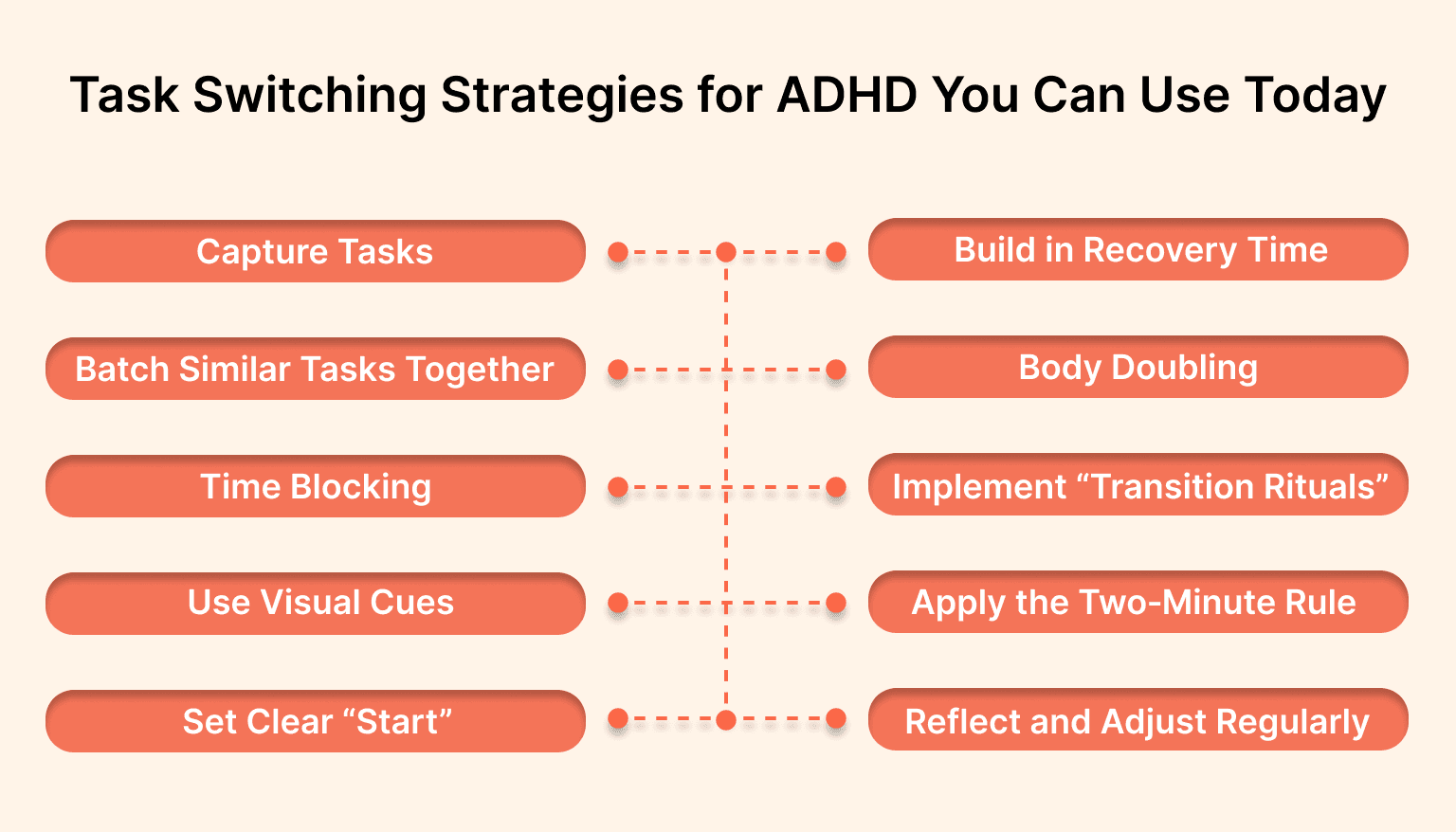
Changing how you handle transitions doesn’t require perfection overnight. It’s about building a system that supports your brain’s natural rhythm and reduces the friction of switching.
Here are actionable strategies that reflect real patterns of ADHD and support sustained focus.
1. Capture Tasks Before You Switch to Them
One of the biggest productivity traps is reacting to tasks before you’ve captured them in a trusted system. When something pops up, an idea, a request, a new task, pause before switching.
What to do:
Use a capture tool (notebook, quick task app, voice memo) to jot down the incoming task.
Confirm that your brain doesn’t have to store it mentally.
Then either finish what you’re doing or schedule dedicated time to address the new task.
This stops your working memory from juggling too many “open loops” at once, a standard executive load that makes task switching tougher.
If you use a tool like Akiflow, you can quickly capture every incoming task in a single dashboard before returning to your focus. That reduces the internal interruption and makes your day feel calmer and more intentional.
2. Batch Similar Tasks Together
Small, similar tasks are easier to handle when grouped, because your brain gets a consistent rhythm. Batching reduces the number of times you switch between different cognitive demands.
How to batch:
Group similar communications (emails, Slack replies, calls) at scheduled times.
Block a chunk of time for administrative tasks, another for creative or analytical tasks.
Don’t mix creative writing with email cleanup in the same session.
When tasks are grouped, your brain can stay in one mode longer without needing to reset itself.
3. Time Blocking: Control Your Day, Don’t Chase It
Time blocking isn’t a productivity fad. It’s a structure that matches how ADHD brains focus best. Instead of a long to-do list, schedule blocks of time for meaningful work segments.
Best practices:
Reserve your most alert, high‑energy hours for your most complex or most important tasks.
Add buffer periods between blocks to allow for transition.
Use calendar reminders to cue the start and end of each block gently.
At the beginning of each block, take a moment to define precisely what success looks like for that session.
Tools that link tasks to your calendar, like Akiflow, make it easier to plan these blocks and keep them aligned with your focus goals.
4. Use Visual Cues to Shift Between Tasks
ADHD brains respond well to clear visual context. When it’s time to switch, make that change visible.
Examples:
Change your workspace background color for different kinds of work.
Use a different icon layout for creative vs. administrative tasks.
Move your chair or stand up briefly between blocks to signal a transition.
These cues help your brain physically mark that one mode is ending and another is starting.
Also Read: ADHD Planners for Students - How Digital Tools Improve Focus and Learning
5. Set Clear “Start” and “Completion” Criteria
One reason switches feel painful is that tasks often end in a gray area. When a task doesn’t have a clear stopping point, your brain tries to keep it active in working memory, which makes it harder to start the next one.
What helps:
Define what completion looks like before you start.
Use checklists that have an actual final step (e.g., “review and close document”).
If a task isn’t complete, create a specific follow‑up task with its own time block.
6. Build in Recovery Time Between Tasks
You may feel tempted to jump immediately from one task to the next. But proper focus isn’t instant. Your brain needs a moment to let go of the first task before taking on the next.
Recovery ideas:
Take a 2–3-minute break or stretch.
Stand up and move around the room.
Do a quick review of your next task before opening it.
These small actions give your brain a moment to reset and reduce the friction of switching, turning a moment that could be distracting into a deliberate reset.
7. Body Doubling: Focus With a Partner Present
Body doubling is a strategy where you work alongside someone else without direct collaboration. The other person’s presence reduces internal distractions and helps maintain focus.
This technique has gained popularity within ADHD communities as a way to externalize accountability and minimize internal resistance to starting or switching tasks.
How to use body doubling:
Work beside a colleague or friend in person or via video.
Establish mini sessions where you both start at the same time, work silently, then check in.
It might feel unusual at first, but many find that a simple shared environment reduces unnecessary task switching.
8. Implement “Transition Rituals” Between Tasks
Rituals signal your brain that a shift is happening. These don’t need to be elaborate, just consistent and intentional.
Transition rituals can include:
Closing all tabs from the previous task.
Taking a sip of water.
Reviewing a short checklist for the next task.
Doing a 15‑second tidy of your workspace.
Over time, your brain starts to recognize these actions as the start of a new focus period.
9. Apply the Two‑Minute Rule for Quick Decisions
Sometimes the most challenging part of switching is deciding what to switch to. Use the two‑minute rule:
If a task will take less than two minutes to decide or schedule, do it now. Otherwise, add it to your prioritized list.
This helps reduce indecision and ensures that small decisions don’t accumulate in your head, slowing your transitions.
10. Reflect and Adjust Regularly
No single strategy is perfect on its own. The key is reflection. At the end of your day or week, review:
Which transitions felt smooth?
Which ones felt chaotic?
What changes did you make that helped?
Where did interruptions derail your flow?
A short reflection helps you design habits that actually stick rather than guessing which habit might work.
Task Switching Isn’t the Enemy, It’s a Skill You Can Strengthen
While ADHD can make task switching feel harder, it doesn’t mean you can’t do it well. It means you need approaches that work with your brain, not against it.
Task switching isn’t about flipping a switch. It’s about preparing your brain for change, protecting your energy, and designing your environment so that transitions are predictable and manageable. That’s what makes the strategies above more than generic productivity tips; they’re ADHD‑friendly, practical systems that support focus and clarity.
Must Read: The ADHD-Friendly Toolkit: Apps for Better Focus and Organization
How do Productivity Tools Support Better Task Switching?
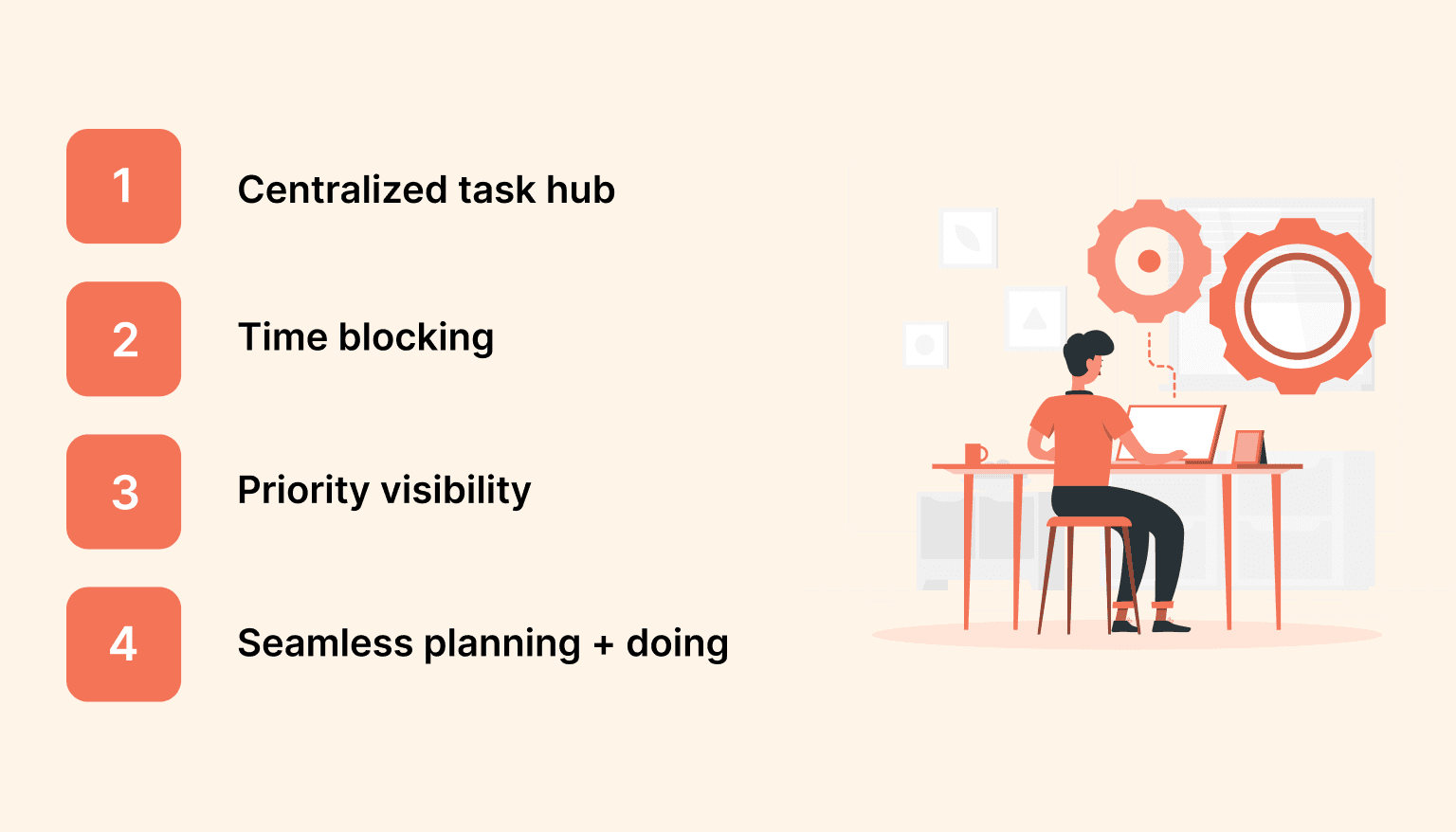
Using a system that helps you capture tasks, prioritize with intention, and block time makes task switching far less chaotic.
Here’s how Akiflow fits into your task-switching toolkit:
Centralized task hub: Everything you need to handle, incoming requests, priorities, ideas goes into one place instead of floating in your head.
Time blocking that aligns with your focus: Plan your task blocks and minimize reactive switches.
Priority visibility: Clear priorities make it easier to decide what comes next, reducing freezes or indecision.
Seamless planning + doing: Tasks and calendar in a single view reduce context switching between tools.
With Akiflow, you don’t react to distractions; you design your day with intent, smoothing the transitions that used to slow you down.
Conclusion
Task switching doesn’t need to feel like a battle between distraction and discipline. When you understand the why behind the challenge and apply purposeful strategies, you start moving through your work with more clarity and less friction.
For people with ADHD, task switching can be reframed from a source of stress into a structured transition skill. You capture tasks before switching, group related work, set clear boundaries for transitions, and build rituals that guide your focus. Over time, these practices create flow and predictability in your workday.
If you want a system that supports these strategies, centralizing your tasks, aligning your priorities, and protecting your focus time, Akiflow helps you design your day intentionally and stay on track.
Akiflow helps you manage priorities and transitions with intention.
Ready to master task switching and protect your focus? Try Akiflow today.
FAQs
Q: Why is task switching harder with ADHD?
A: ADHD affects executive functions like working memory and cognitive flexibility, making it challenging to disengage from one task and engage with another smoothly.
Q: Are multitasking and task switching the same?
A: No. Multitasking involves handling multiple tasks at once, while task switching involves rapidly shifting focus between distinct tasks. Both reduce productivity, but task switching places greater executive function demands.
Q: How long does it take to build better task-switching habits?
A: Habits begin to form with consistent practice over weeks. Regular reflection and adjustment help you refine strategies that work best for your routine.
Q: Can technology help with task switching?
A: Yes. Tools like Akiflow help capture tasks, manage priority blocks, and reduce cognitive load, making transitions smoother.
Q: What’s a quick strategy to start today?
A: Begin by capturing everything in a central system before switching tasks. This reduces internal distraction and helps you pick up where you left off.


