
Managing your day effectively is more than just crossing tasks off a to-do list. In a world that is always revolving, staying on top of your responsibilities can be overwhelming, especially with competing priorities and constant distractions. But what if you could break down your day into clear, actionable steps that help you stay focused, organized, and productive? That’s where daily work management comes in.
In this blog, we’ll walk you through essential daily work management steps that can transform how you approach your day. By adopting a structured workflow, you can prioritize your tasks, maximize your productivity, and maintain balance throughout your day.
Key Takeaways
Prioritize Your Tasks: Learn how to identify your most important tasks (MITs) and focus on what matters most.
Plan Your Day Effectively: Understand the power of scheduling and how to allocate time for focused work.
Avoid Distractions: Discover strategies to minimize interruptions and stay on track.
Stay Flexible: Embrace a flexible approach to daily work management to accommodate unexpected changes.
Leverage Tools for Efficiency: Use apps and systems that streamline your workflow to enhance daily work management.
What is Daily Work Management?
Work management is the practice of planning, organizing, tracking, and optimizing how tasks and projects get done within a team or organization. It brings together people, processes, and tools to ensure work is clearly defined, assigned, and completed on time. Effective work management helps teams prioritize tasks, manage dependencies, track progress, and collaborate more efficiently.
It also provides visibility into workloads, deadlines, and outcomes, making it easier for managers to allocate resources and remove bottlenecks. By creating structure and accountability, work management enables teams to deliver consistent results while adapting to changing priorities.
Why is Daily Work Management Important?
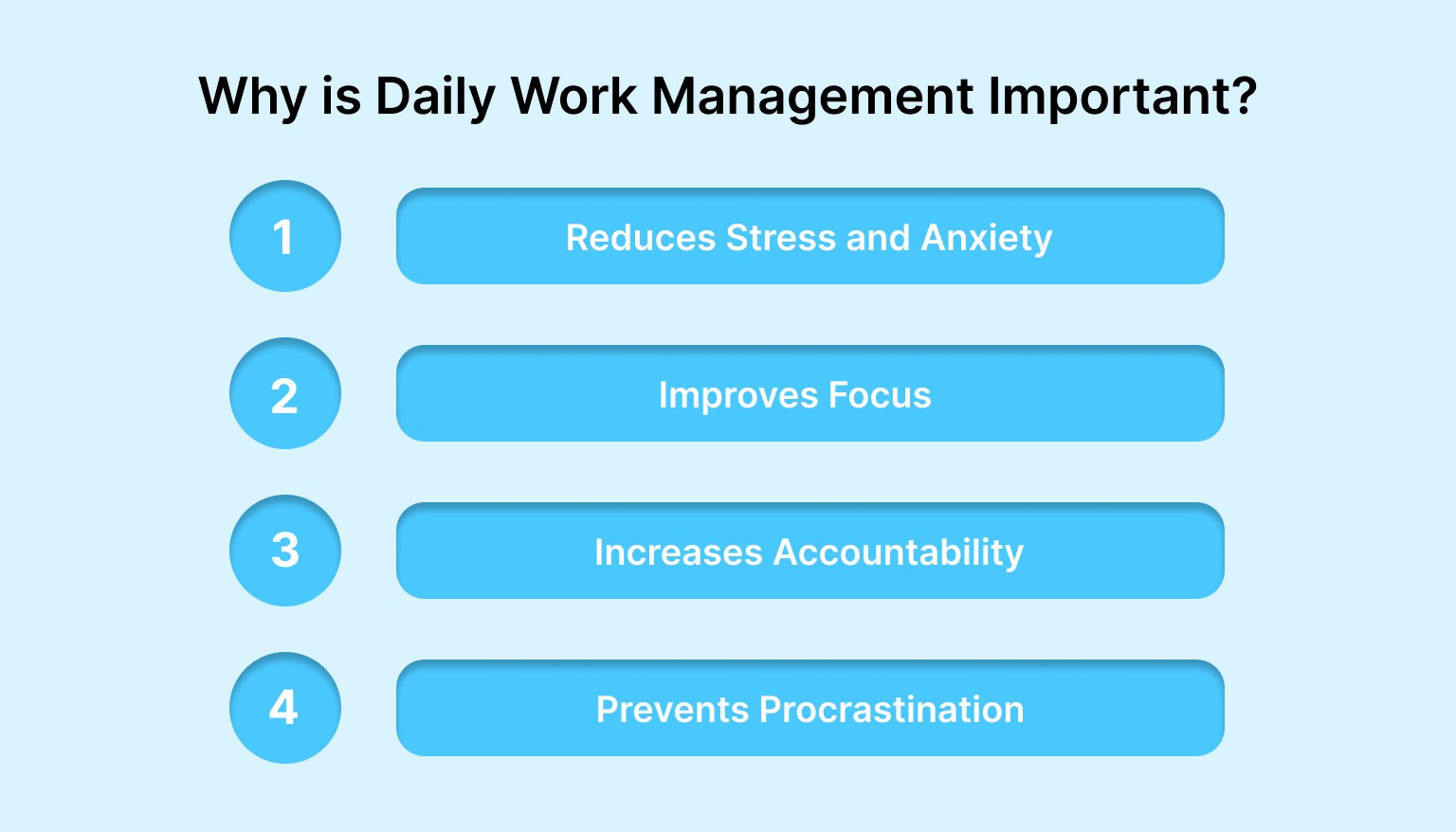
The need for effective daily work management has never been greater. Between emails, meetings, deadlines, and personal commitments, it’s easy to feel overwhelmed. Here’s why daily work management is critical to success:
Reduces Stress and Anxiety: Having a structured plan reduces mental clutter and helps you avoid the anxiety that comes with unorganized tasks.
Improves Focus: Knowing exactly what to focus on and when helps you stay on task and be productive.
Increases Accountability: A clear plan of action means you hold yourself accountable, track progress, and adjust as needed.
Prevents Procrastination: Breaking down tasks into smaller, manageable steps makes them feel less intimidating, reducing the urge to procrastinate.
Now that we understand why daily work management is important, let’s take a closer look at how you can implement it.
Also Read: How to Take Effective Meeting Minutes with Templates
Daily Work Management Steps to Maximize Your Productivity
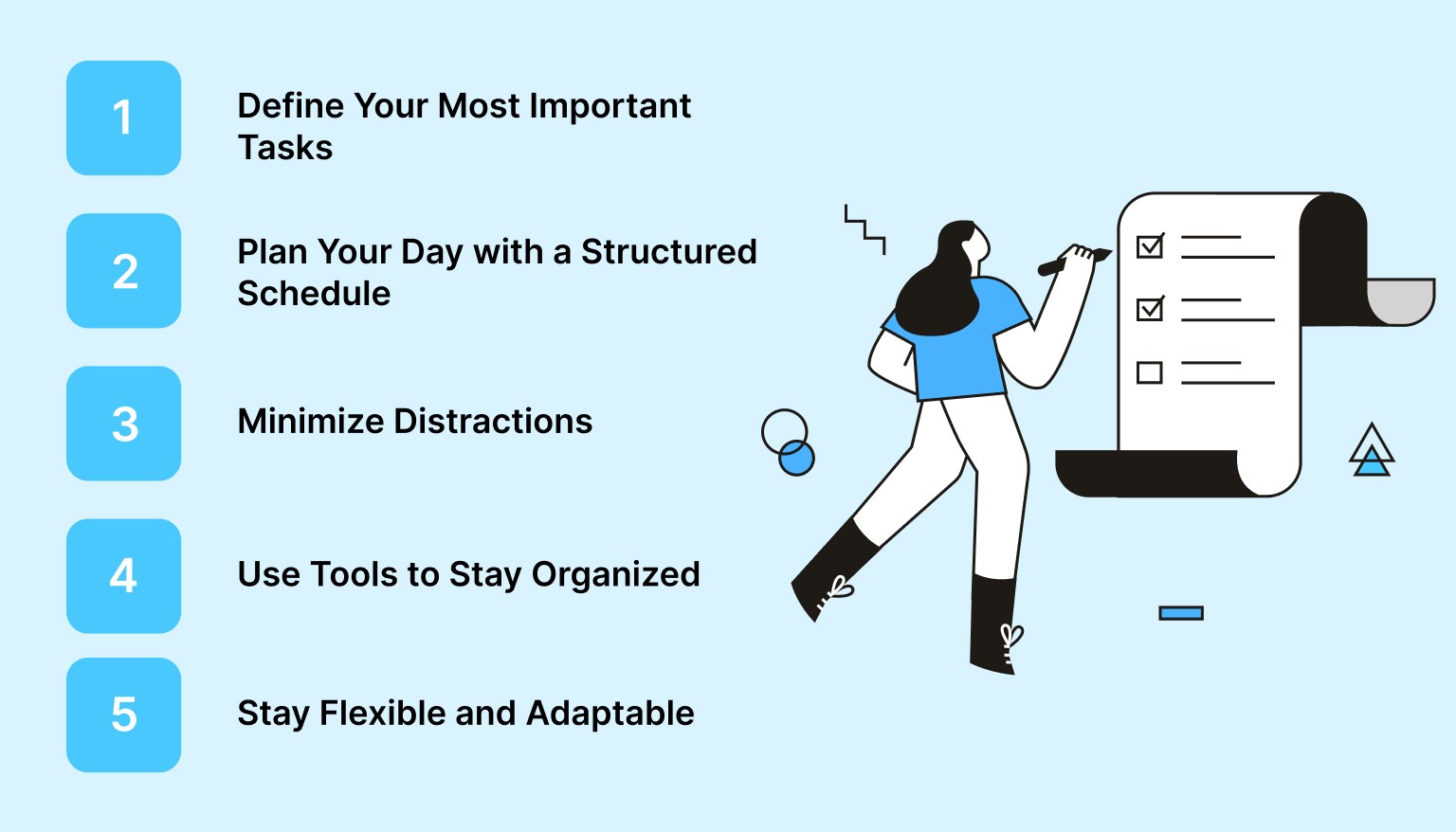
Daily work management is about organizing your day to achieve maximum efficiency and productivity. In this section, we’ll walk you through the essential steps to prioritize, plan, and execute your tasks effectively. These steps will help you reduce distractions, stay focused, and ensure that your efforts align with your most important goals.
Let’s explore the key strategies that can transform your daily workflow and make you more productive, starting from prioritizing tasks to staying flexible when things change.
Step 1: Define Your Most Important Tasks (MITs)
The first step in daily work management is identifying the tasks that matter most. These are your Most Important Tasks (MITs), the tasks that will have the greatest impact on your day or project.
Here’s how to define your MITs:
Focus on Outcomes: Identify tasks that bring you closer to your long-term goals or deadlines.
Consider Impact: Ask yourself which tasks will move the needle in your work or life.
Limit MITs: Keep it to 2-3 tasks per day to avoid overwhelming yourself.
Once you’ve defined your MITs, make sure you dedicate uninterrupted time to focus on them throughout the day. Prioritize these tasks and make them your focus.
Step 2: Plan Your Day with a Structured Schedule
A well-organized schedule is key to managing your day effectively. Planning your day with a clear structure helps you allocate time to your MITs and allows space for other necessary tasks.
Here’s how to plan your day effectively:
Time Blocking: Allocate specific time blocks for each task, ensuring that you have enough uninterrupted time to complete them.
Set Realistic Time Frames: Be mindful of how long each task will take, leaving some buffer time for flexibility.
Prioritize Tasks Based on Energy: Schedule your most demanding tasks during times when you have the most energy (e.g., mornings).
By having a structured schedule, you can stay organized and ensure that your tasks are completed on time.
Step 3: Minimize Distractions
Distractions are one of the biggest productivity killers. Whether it’s social media, emails, or meetings, distractions can break your focus and prevent you from completing your tasks.
Here are some strategies to minimize distractions:
Turn Off Notifications: Silence notifications during focused work sessions to avoid interruptions.
Use a Dedicated Workspace: Create a dedicated workspace that minimizes distractions.
Set Boundaries: Inform colleagues or family members about your focused work periods to avoid unnecessary interruptions.
Minimizing distractions helps you stay on task and use your time effectively.
Step 4: Use Tools to Stay Organized
Using the right tools is essential for managing your daily tasks efficiently. Task management apps, calendars, and to-do lists can help you stay on top of your MITs and ensure that nothing falls through the cracks.
Here’s how tools can help you:
Centralized Task Management: Keep everything in one place, from tasks to appointments, to avoid juggling multiple apps.
Sync with Your Calendar: Ensure your tasks align with your calendar to avoid over-scheduling.
Track Progress: Use progress trackers to gauge your progress and adjust as needed.
If planning your day feels scattered across too many tools, Akiflow brings tasks, calendars, and priorities into one clear view. It helps you plan your day around what actually matters, not just what’s loudest.
Step 5: Stay Flexible and Adaptable
While structure is key to daily work management, it’s also important to remain flexible. Not everything will go as planned, and that’s okay. Life happens, and sometimes unexpected tasks or disruptions arise.
Here’s how to stay flexible:
Build in Buffer Time: Leave time between tasks for overruns or unexpected events.
Reevaluate Priorities: If something urgent comes up, reassess your schedule and shift tasks around as needed.
Don’t Stress: If something doesn’t get done today, move it to tomorrow’s schedule.
A flexible approach ensures you’re still in control, even when things don’t go according to plan.
A Sample Day Layout
To put daily work management into practice, it helps to visualize what a well-structured day can look like. Below is a simple example of how you might organize your day using the steps discussed above:
Morning (High focus time)
Review your MITs, block time for deep work, and tackle the most demanding task first.Midday (Moderate energy)
Handle meetings, emails, and collaborative tasks that require interaction but less deep focus.Afternoon (Execution & follow-ups)
Complete secondary tasks, review progress, and update your task list or tools.End of day (Wrap-up)
Reflect on what was completed, move unfinished tasks if needed, and plan MITs for the next day.
This kind of layout creates clarity, prevents overload, and helps you end each day with a sense of control rather than urgency.
Read More: Time Management Plan: 6 Strategies To Improve Productivity
Common Mistakes to Avoid in Daily Work Management
While daily work management can be a game-changer for productivity, there are a few mistakes you should avoid:
Over-Scheduling: Trying to fit too much into your day can lead to burnout. Make sure to leave room for flexibility and breaks.
Ignoring Breaks: Working without breaks can lead to fatigue. Make sure to schedule short breaks to recharge.
Lack of Prioritization: Failing to focus on your MITs can lead to less meaningful progress. Always prioritize the tasks that matter most.
Conclusion
Daily work management is more than just a productivity tool; it’s a way to take control of your time and reduce stress. By prioritizing your MITs, planning your day effectively, and minimizing distractions, you can create a more structured and productive workday. Embrace flexibility, use the right tools, and start taking proactive steps towards improving your daily work management.
Ready to start managing your day more effectively? Akiflow’s smart task management features help you organize, prioritize, and stay on track. Try Akiflow today and experience how it can help you stay productive and organized.
FAQs
How can I prioritize tasks when everything feels urgent?
Start by identifying your MITs and focus on those first. Categorize tasks by urgency and impact, and tackle the most important ones first.How can I prevent distractions while working from home?
Set clear boundaries with others, create a dedicated workspace, and use apps to stay organized and focused on your tasks.What if I miss a task or don’t complete it on time?
Life happens! Don’t stress, reschedule the task and adjust your priorities for the next day.Can I integrate my task management app with my calendar?
Yes, many task management apps allow integration with your calendar, helping you stay organized and aligned with your schedule.How do I handle unexpected changes in my schedule?
Use buffer time and stay flexible. Reassess your schedule, shift tasks around, and prioritize the most urgent work.


