
In a world full of distractions and to-do lists that seem to never end, staying productive can feel like an uphill battle. For those simply struggling to stay focused, the constant juggling of tasks can be overwhelming. But what if you could turn this chaos into a well-organized, structured flow? Block scheduling is the answer. This method not only helps you organize your day but also ensures you prioritize what matters most.
If you’re ready to take control of your time, stay on task, and increase your productivity, block scheduling might be exactly what you need. Let’s dive into how you can get started and maximize your productivity with this powerful method.
Key Takeaways
Block Scheduling Enhances Focus: By dedicating specific time blocks to tasks, you minimize distractions and multitasking, leading to improved focus and higher-quality work.
Improves Time Management: Allocating clear time slots for each task enhances time awareness, helping you see where your time is being spent and identify areas for improvement.
Prioritize Your Most Important Tasks (MITs): Start by identifying the tasks that matter most, and assign uninterrupted blocks of time to ensure they get the attention they deserve.
Avoid Over-Scheduling: It’s important to leave room for breaks and flexibility in your schedule to avoid burnout and maintain productivity throughout the day.
Adapts to Different Work Styles: Whether you’re a remote worker, freelancer, or part of a team, block scheduling can help create structure and reduce distractions, boosting productivity across various work setups.
What is Block Scheduling?
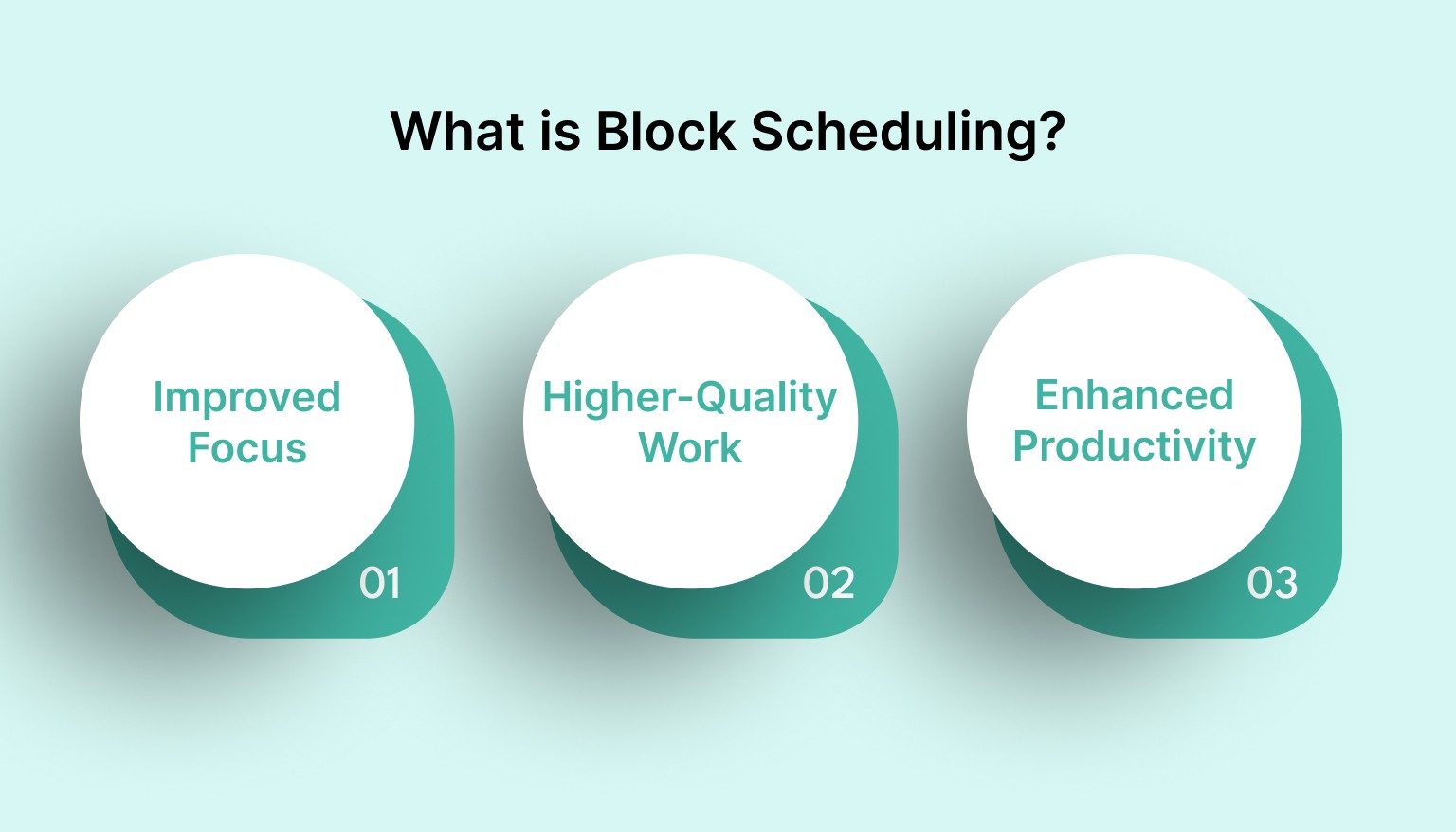
Block scheduling is a powerful productivity technique that divides your day into specific time blocks, each dedicated to a particular task or group of tasks. This method helps you stay focused and organized, ensuring that you’re not juggling multiple responsibilities at once.
By assigning a designated time to each task, you eliminate distractions and the temptation to multitask. Block scheduling can make your day more structured and productive, ultimately leading to better results.
Block Scheduling vs Time Blocking
Block scheduling and time blocking are often used interchangeably, but there’s a subtle difference between the two. Block scheduling focuses on assigning larger chunks of time to categories of work, such as meetings, deep work, or admin tasks. It provides high-level structure and helps you shape the overall flow of your day.
Time blocking, on the other hand, is more granular. It involves assigning specific tasks to exact time slots on your calendar, often down to the hour or minute. While time blocking offers precision, block scheduling offers flexibility. Many people combine both—using block scheduling to define broad focus periods and time blocking to plan critical tasks within those blocks.
Why Block Scheduling Works for Focus and Productivity?
If you’ve ever tried juggling multiple tasks at once, you know how quickly things can slip through the cracks. Block scheduling prevents this by allocating specific time slots for each task, allowing you to focus fully on what you’re doing at any given moment.
Here are the main reasons block scheduling works so well:
Reduces Decision Fatigue
By organizing your day ahead of time, you eliminate the constant decision-making process of what to tackle next. Your brain can focus solely on the task at hand, conserving energy for important decisions later.Prevents Task Switching
The constant switching between tasks leads to productivity loss. Block scheduling ensures that you can stay focused on one task without interruptions.Encourages Deep Work
Block scheduling provides longer, uninterrupted periods for deep work. This is especially crucial for complex tasks that require sustained focus.Improves Time Awareness
With each task assigned a defined time slot, you gain a clearer sense of how you spend your time and where you can improve.
Also Read: The 6 Best Scheduling Apps You Need in 2025
How to Implement Block Scheduling for Maximum Impact?
Implementing block scheduling doesn’t require major changes to your workflow; it’s about making smarter decisions on how you organize your time. By setting aside dedicated time blocks for specific tasks, you create a structured approach to your day.
This simple adjustment helps you stay focused and prioritize important work, boosting productivity without overwhelming your schedule. It’s all about optimizing your time for maximum efficiency.
Here’s how you can start:
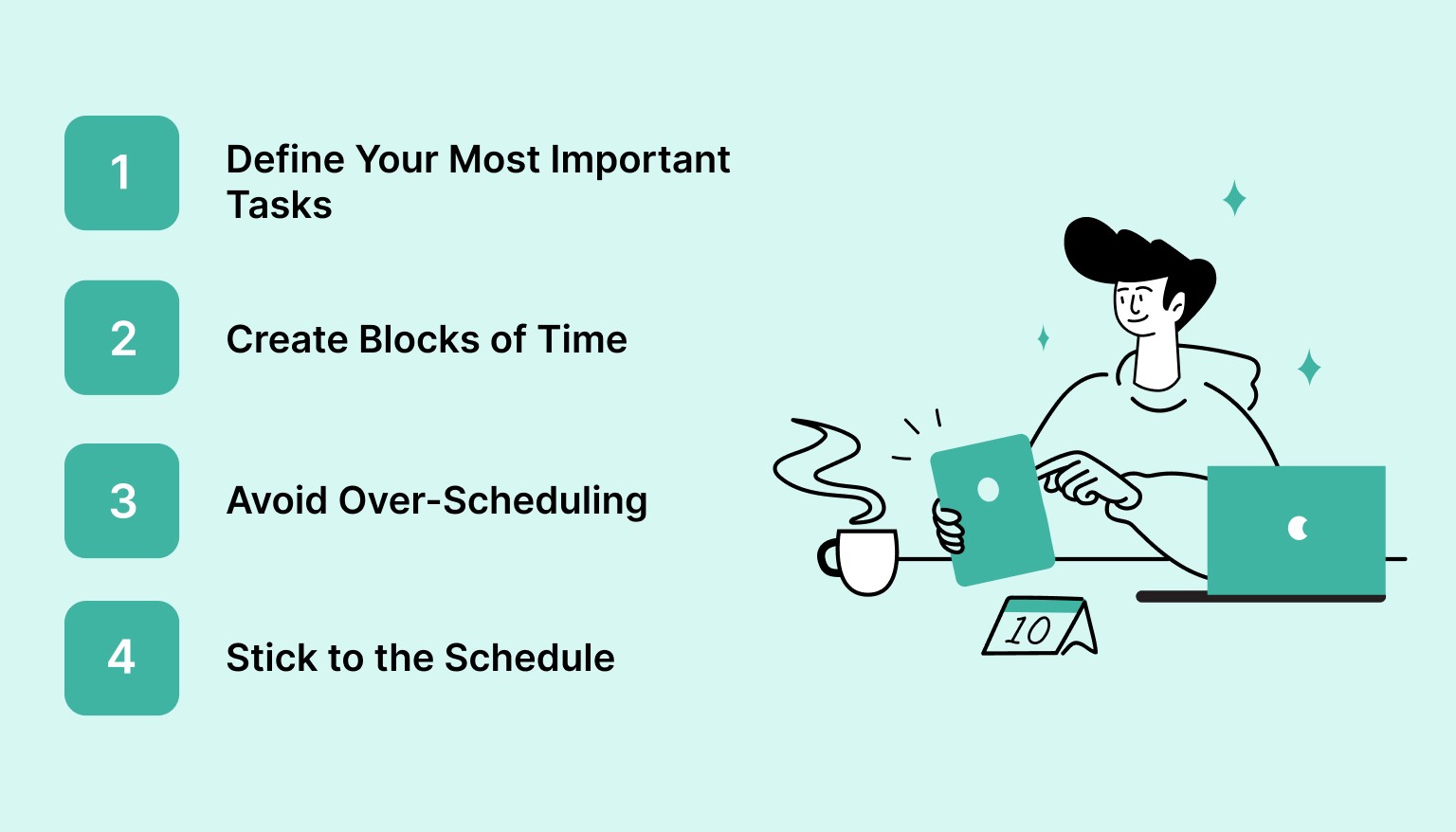
Define Your Most Important Tasks (MITs)
The first step in implementing block scheduling is identifying your Most Important Tasks (MITs). These are the tasks that will have the most significant impact on your day or project. Rather than getting lost in a long to-do list, focusing on what truly matters will help you make better progress and achieve your goals faster.
To prioritize effectively, ask yourself: Which tasks require your full attention and will bring the most value to your work? Once you’ve identified these tasks, allocate a specific time block in your schedule and ensure you dedicate uninterrupted time to them. Avoid distractions during this period, and make it your goal to complete the task in that block of time.
Create Blocks of Time
Once you’ve pinpointed your MITs, it’s time to allocate time blocks in your schedule. Start by breaking your day into manageable chunks. You can start with shorter blocks, such as 30 minutes to an hour, and gradually increase the length as you become more comfortable. The key is to be realistic about how much time each task will take and set aside enough uninterrupted time to complete it.
Consider your energy levels throughout the day as well. If you know you’re most focused in the morning, allocate your most challenging or creative tasks during that time. For less demanding tasks, consider scheduling them for later in the day when your energy might be lower.
Avoid Over-Scheduling
It’s tempting to fill every minute of your day with tasks, but over-scheduling can lead to burnout and stress. Make sure you leave some buffer time between blocks to accommodate overruns or unforeseen interruptions. Scheduling some breaks will give your brain a chance to recharge, helping you maintain focus throughout the day.
Stick to the Schedule
The most crucial part of block scheduling is commitment. Treat your time blocks like meetings or appointments that can’t be moved. If you’ve dedicated time to a task, focus solely on that task and avoid checking emails, social media, or jumping between tasks. By sticking to your schedule, you’ll build discipline and maximize your productivity throughout the day.
Example of a Daily Block Scheduling Routine
Seeing block scheduling in action makes it easier to apply. Below is a simple example of how a typical workday can be structured using blocks:
9:00–11:00 AM: Deep work block
Focus on high-impact tasks such as strategic planning, writing, coding, or design work. No meetings or notifications.11:00–12:00 PM: Communication block
Respond to emails, messages, and quick follow-ups that don’t require deep focus.1:00–2:30 PM: Execution block
Work on secondary tasks, reviews, or ongoing project work that still needs concentration but less intensity.2:30–3:00 PM: Break and reset
Step away from work to recharge and avoid mental fatigue.3:00–4:30 PM: Meetings or collaboration block
Schedule team meetings, client calls, or collaborative sessions together to prevent interruptions earlier in the day.4:30–5:00 PM: Wrap-up block
Review what was completed, move unfinished tasks, and plan blocks for the next day.
This kind of structure keeps your day predictable without feeling rigid, helping you stay focused while leaving room for flexibility.
Ready to take control of your time? Akiflow simplifies task management, helping you stick to your schedule and boost your productivity. Start using Akiflow today and see how simple it is to stay on track.
The Benefits of Block Scheduling for Different Work Styles
Block scheduling isn’t just for one type of worker; it can be adapted for various work styles. Whether you’re a freelancer, a remote worker, or part of a team, this system can help you manage your time effectively.
Here are some benefits for different work setups:
For Remote Workers
Remote work often comes with the freedom to manage your own schedule. Block scheduling helps you set clear boundaries between work and personal life, reducing distractions.For Freelancers
Freelancers juggle multiple clients and projects. Block scheduling helps maintain focus on one task or client at a time, preventing burnout and ensuring timely deliveries.For Teams
Teams can benefit from block scheduling by allocating focused work time and ensuring that collaborative efforts happen without interruptions.
Common Mistakes to Avoid with Block Scheduling
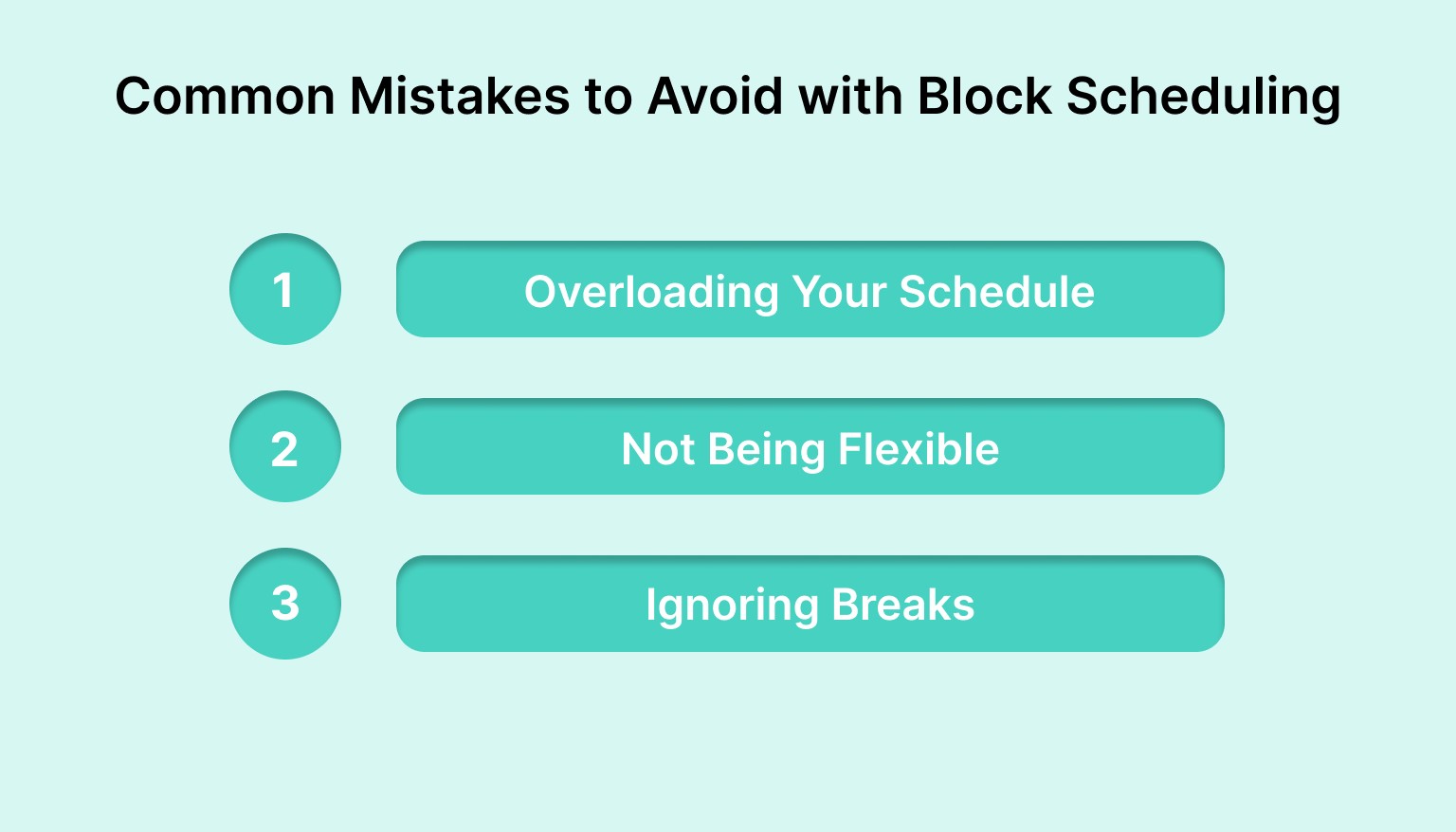
Block scheduling can transform the way you work, but like any method, it has its pitfalls. Avoid these common mistakes to get the best results:
Overloading Your Schedule
Trying to fit too many tasks into one day can backfire. Keep your blocks reasonable to avoid burnout.Not Being Flexible
Sometimes tasks take longer than expected. Flexibility is key when block scheduling, so allow buffer time for adjustments.Ignoring Breaks
It’s tempting to fill every moment with work, but rest is essential for maintaining focus and preventing fatigue.
Also Read: Time Management Plan: 6 Strategies To Improve Productivity
Conclusion
Block scheduling is more than just a time management technique; it’s a way to improve focus, boost productivity, and take control of your day. With a clear structure, you can eliminate distractions, reduce stress, and create more time for meaningful work. Whether you have ADHD, work remotely, or juggle multiple projects, block scheduling offers a simple solution to make your day more productive.
Are you ready to take control of your time? Start implementing block scheduling today and experience how small changes in your routine can lead to big productivity gains.
Try Akiflow today to streamline your task management and start blocking your time effectively.
FAQs
How can block scheduling help if I have ADHD?
Block scheduling is highly effective for those with ADHD as it provides structure and reduces distractions. By dedicating focused time to one task at a time, you’ll avoid the urge to multitask and improve your ability to concentrate.
What’s the best way to start block scheduling for a busy schedule?
Begin by identifying your most important tasks (MITs) and allocate time blocks for them. Start with shorter blocks (30-60 minutes) and build up. Over time, you’ll get a clearer sense of how much time each task requires.
Can I use block scheduling for team projects?
Yes, block scheduling works for teams too. Assigning specific blocks for collaborative work and individual tasks ensures focused efforts and minimizes interruptions during critical project phases.
How flexible should I be with my time blocks?
Flexibility is key. While block scheduling helps structure your day, life happens. Allow for buffer time between blocks to accommodate overruns or unexpected tasks, and adjust your schedule when needed.
How does block scheduling compare to traditional to-do lists?
Block scheduling is more effective than to-do lists because it prioritizes specific tasks within dedicated time blocks. Unlike to-do lists, which often lead to task switching and procrastination, block scheduling ensures focused and uninterrupted work on the most important tasks.


