
Attention-deficit/hyperactivity disorder (ADHD) is often described as a problem with attention, but many researchers now recognize it as something deeper. People with ADHD frequently struggle with planning, organization, impulse control, and managing time. These problems are connected to a set of mental skills known as executive functions.
One of the most influential researchers in this area is clinical psychologist Dr. Russell Barkley. His work changed how ADHD is understood and treated. Instead of focusing only on attention problems, Barkley stressed the role of self-regulation and executive functioning.
From this research emerged what many people informally call the Barkley Method—a framework based on Dr. Barkley’s work that emphasizes using external systems to support planning, time management, and behavior regulation.
This guide explains the principles behind the Barkley Method, why they work, and how people with ADHD can apply them in everyday life.
Key Takeaways
ADHD is largely linked to challenges with executive functioning, including planning, time management, and impulse control.
The Barkley Method focuses on managing ADHD by externalizing tasks, time, and priorities instead of relying on memory or willpower.
Strategies such as visual task systems, time blocking, and next-action planning help reduce overwhelm and improve follow-through.
Designing supportive environments and using external accountability can strengthen consistency and focus.
Tools that combine task management with scheduling help turn plans into action by making priorities visible and attaching them to real time.
Understanding ADHD Through the Barkley Model
Before looking at the method itself, it helps to understand the theory behind it.
ADHD as an Executive Function Disorder
Dr. Barkley’s research suggests that ADHD is largely a disorder of executive functioning.
Executive functions are the mental processes that help people manage behavior, planning, and decision-making.
Plan ahead
Control impulses
Organize tasks
Manage time
Control emotions
Maintain working memory
For people with ADHD, these processes do not operate as efficiently. The result is not simply distraction but difficulty managing behavior over time.
The Importance of Self-Regulation
One of Barkley’s central ideas is that ADHD affects self-regulation.
Self-regulation is the ability to pause before acting, consider consequences, and choose the best course of action. When this system is impaired, people may struggle to:
Start tasks even when they want to
Resist distractions
Maintain long-term goals
Control emotional behaviors
This helps explain why many traditional productivity strategies fail for people with ADHD. These systems assume a level of internal control that ADHD brains find difficult to maintain.
Also Read: What Is Workflow Automation Software and Why Teams Need It?
What Is the Barkley Method?
Approaches inspired by Barkley’s research focus on strengthening executive functioning by externalizing important mental processes.
Instead of relying solely on memory, willpower, or internal motivation, the method prompts individuals to build external systems that support planning and behavior.
In simple terms, the Barkley Method suggests:
If the brain struggles to manage something internally, make it visible and structured in the environment.
This may involve using:
Visual reminders
Organized routines
Task lists
Timers and alarms
Planning systems
Accountability mechanisms
By moving information and structure into the environment, people with ADHD can lessen cognitive overload and improve follow-through.
Core Principles of the Barkley Method
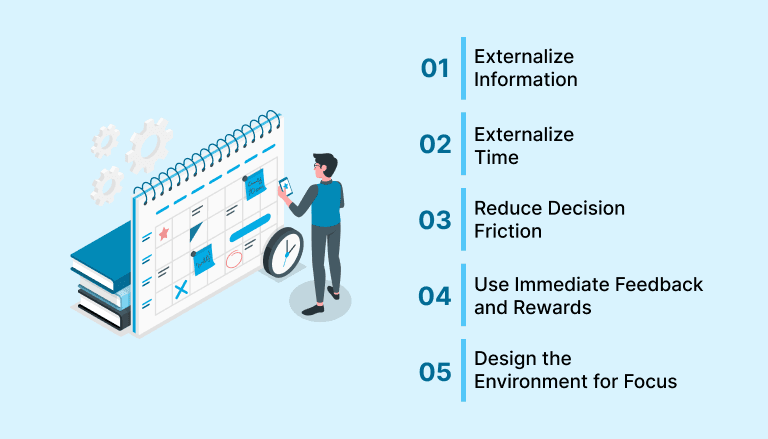
The Barkley Method is built on multiple essential principles that strengthen self-regulation and executive functioning through external support systems. Instead of depending solely on memory or willpower, this method promotes structured strategies that make tasks, time, and priorities more visible and manageable.
Here are the core principles of the Barkley Method.
1. Externalize Information
Working memory can be unreliable for people with ADHD. Tasks, deadlines, and responsibilities may easily slip away if they remain only in the mind.
Externalizing information means placing important reminders outside the brain.
Examples include:
Writing down tasks in a planner
Using a whiteboard for daily priorities
Keeping visible checklists
Using digital task systems
The goal is simple: make responsibilities visible at all times.
2. Externalize Time
Many people with ADHD experience something known as time blindness.
Time blindness makes it difficult to estimate how long tasks take or recognize how quickly time is passing.
To counter this, Barkley recommends making time more visible.
Useful tools include:
Timers
Countdown clocks
Calendar reminders
Time blocking schedules
These tools help translate abstract time into concrete, observable terms.
3. Reduce Decision Friction
Another barrier to productivity is decision fatigue. When starting a task that requires multiple decisions, it becomes easier to delay action.
Reducing decision friction means simplifying how tasks begin.
For example:
Instead of writing:
Work on the presentation
Write:
Create an outline for presentation slides
Clear starting points reduce resistance and help people begin tasks more quickly.
4. Use Immediate Feedback and Rewards
ADHD brains tend to respond more strongly to immediate reinforcement than delayed rewards.
Long-term goals such as promotions or project completion may not provide enough motivation in the moment.
The Barkley Method suggests adding smaller rewards and response cycles, such as:
Checking off completed tasks
Following progress visually
Using short work intervals
Honoring small milestones
These signals help sustain engagement and momentum.
5. Design the Environment for Focus
Rather than relying entirely on discipline, the Barkley Method stresses changing the environment.
Environmental design can considerably influence behavior.
Examples include:
Creating a dedicated workspace
Removing visual distractions
Using noise-blocking headphones
Keeping planning tools visible
Small environmental adjustments can reduce friction and support consistent habits.
Practical Strategies Inspired by the Barkley Method
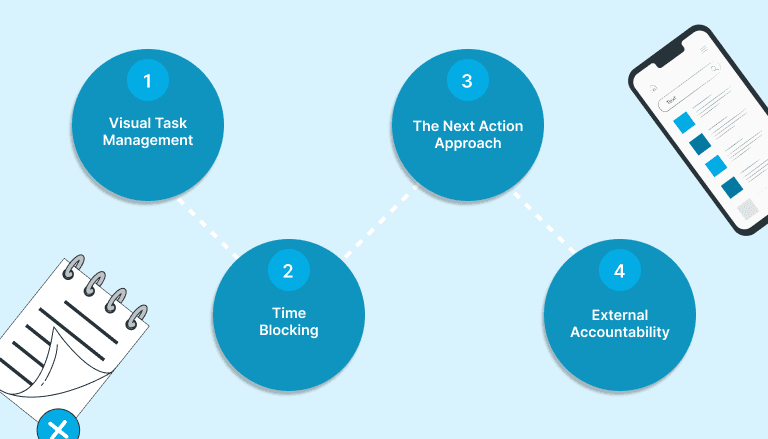
The Barkley Method centers on practical strategies that make tasks, time, and priorities easier to manage in daily life. Rather than relying solely on memory or motivation, it encourages external systems that support focus, planning, and follow-through.
The following strategies show how these principles can be applied in everyday routines.
1. Visual Task Management
Visual systems keep responsibilities visible and prevent important tasks from being forgotten. When tasks remain in your line of sight, it becomes easier to remember priorities and take action.
Common visual tools include:
Daily task boards
Kanban boards
Whiteboards
Digital task lists
These systems reduce the mental effort required to remember tasks, allowing individuals to focus on completing them.
2. Time Blocking
Time blocking divides the day into specific work periods so tasks are attached to real time rather than sitting on an open-ended list. This approach creates structure and reduces the stress of deciding what to do next.
Example schedule:
Morning focus block: Deep work or complex tasks
Midday block: Meetings and communication
Afternoon block: Administrative tasks and planning
By designating tasks to defined time windows, time blocking helps sustain concentration and prevents work from feeling scattered throughout the day.
3. The Next Action Approach
Large projects often feel overwhelming when they appear as a single item on a task list. The Barkley Method recommends identifying the next immediate step required to move a project forward.
Example:
Project: Write a research paper
Following steps:
Gather reference articles
Create outline
Draft introduction
Breaking projects into smaller actions removes uncertainty and makes it easier to begin working.
4. External Accountability
Many people with ADHD benefit from systems that provide external structure and encouragement. Accountability mechanisms can help maintain momentum and increase follow-through.
Examples include:
Study partners
Work check-ins
ADHD coaching
Progress reports
These forms of accountability create supportive pressure that encourages consistency and progress.
Read Also: Daily Work Management: Steps to Plan and Control Your Day
Who Can Benefit From the Barkley Method?
The Barkley Method can support a wide range of individuals.
It may help:
Adults managing ADHD in professional environments
Students struggling with organization and deadlines
Parents helping children build routines
Professionals dealing with executive functioning challenges
Because the approach focuses on environmental supports rather than personality traits, it can be adapted to diverse age groups and situations.
Barkley Method vs Traditional Productivity Advice
Traditional productivity advice often assumes people can rely on internal motivation and self-discipline.
Common advice includes:
Just focus harder
Try to remember your priorities
Push through distractions
For people with ADHD, these strategies rarely work consistently.
The Barkley Method differs in one crucial way.
It assumes such a structure must exist outside the brain, not just inside it.
Instead of expecting constant mental control, it builds systems that guide behavior.
Common Misconceptions About ADHD
ADHD is often misunderstood, and many common beliefs about it do not reflect how the condition actually works. These misconceptions might lead to unhelpful advice and unrealistic expectations for those managing ADHD.
Here are some common misconceptions about ADHD and the realities behind them.
People with ADHD simply lack discipline or willpower
ADHD is a neurological condition, not a character flaw. Individuals with ADHD frequently want to complete tasks but have difficulty with task initiation, sustained effort, and follow-through due to distinctions in how the brain regulates attention and motivation.ADHD only affects children and disappears in adulthood
While ADHD is often diagnosed during childhood, many people continue to experience symptoms as adults. Adult ADHD may appear differently, often showing up as challenges with organization, deadlines, career responsibilities, and emotional management.People with ADHD are lazy or unmotivated
Many people with ADHD are highly motivated but struggle to translate intentions into action. Difficulties with executive functioning can make starting tasks, keeping focus, and completing projects more difficult despite strong interest or effort.ADHD only affects school performance
ADHD affects many areas of life beyond academics. It can influence workplace productivity, financial organization, relationships, emotional control, and the ability to manage daily responsibilities.Highly intelligent people cannot have ADHD
Intelligence and ADHD are unrelated. Many people with ADHD are highly capable and creative, but executive functioning challenges can still affect how consistently they organize work, manage time, and complete complex tasks.Adults with ADHD just need better time management
ADHD frequently involves “time blindness,” which makes it difficult to estimate how long tasks take or to accurately feel the passage of time. Tools that make time visible, such as timers and structured schedules, are often more helpful than simple advice to plan better.
A Simple Barkley Method Routine
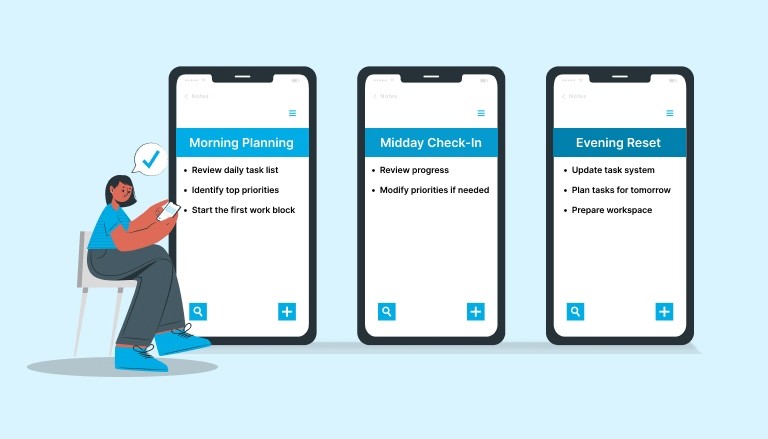
The Barkley Method stresses structure, visibility, and consistency. A simple routine built around these principles can make daily tasks easier to manage. By creating predictable checkpoints throughout the day, people with ADHD can stay aware of their priorities, modify their plans, and maintain momentum without relying solely on memory or motivation.
Let’s look at a simple Barkley Method routine.
Morning Planning
Review daily task list
Identify top priorities
Start the first work block
Midday Check-In
Review progress
Modify priorities if needed
Evening Reset
Update task system
Plan tasks for tomorrow
Prepare workspace
These small routines create consistency and reduce decision fatigue.
How Can Tools Support the Barkley Method?
Many Barkley strategies depend on reliable external systems. Digital tools that combine task management and scheduling can make these systems easier to maintain.
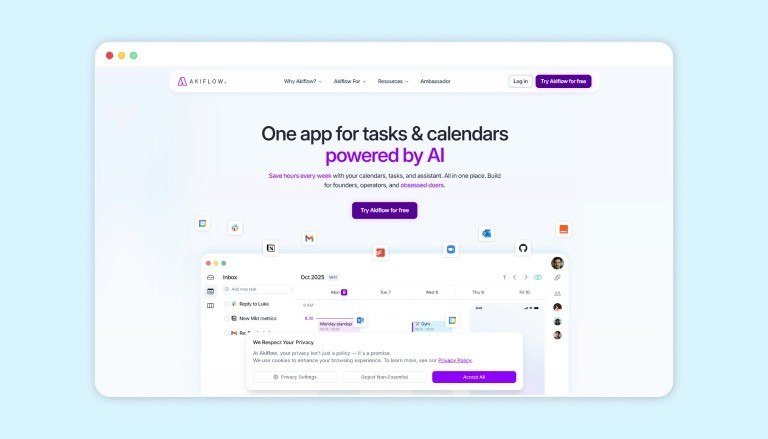
Platforms such as Akiflow allow users to:
Capture tasks in one place
Organize daily priorities
Schedule tasks into calendar blocks
Monitor progress throughout the day
By connecting tasks to actual time on the calendar, these tools help ensure plans become action.
Conclusion
The Barkley Method grants a practical approach to managing ADHD via addressing its essential challenges in executive functioning and self-regulation. Rather than depending solely on willpower, the method advocates building external systems that support planning, time awareness, and task completion.
Tools like Akiflow help bring the Barkley Method to life by keeping your tasks, reminders, and calendar in one place. By making priorities visible and attaching tasks to real time, you can create the external structure that ADHD brains often need to stay organized and consistent.
Start applying these strategies today and build a system that supports your focus instead of fighting against it. Try Akiflow to centralize your tasks, structure your day, and turn your plans into action.
FAQs
1. Is the Barkley Method an official ADHD treatment?
The Barkley Method is not a formal therapy program but a set of strategies based on Dr. Russell Barkley’s research on ADHD and executive functioning.
2. How is the Barkley Method different from typical productivity advice?
Most productivity advice assumes people can rely on memory, motivation, and internal discipline. The Barkley Method takes a different approach by externalizing tasks, time, and priorities.
3. Can adults use the Barkley Method for managing ADHD at work?
Yes. Many adults use Barkley-inspired strategies in work settings, such as organized routines, task boards, time blocking, and accountability systems.
4. Does the Barkley Method work for children with ADHD?
Yes. Parents and educators often apply Barkley-based principles by creating visual schedules, stable routines, reward systems, and clear behavioral expectations. These structures help children develop stronger self-regulation and task management skills.
5. What tools are helpful when applying the Barkley Method?
Helpful tools include visual planners, timers, checklists, task management apps, and calendar-based planning systems. These tools support the Barkley Method’s goal of making tasks, time, and priorities visible.


