

In a world filled with distractions and constant demands, having a structured life becomes one of the most impactful productivity questions professionals ask when they feel overwhelmed. Whether it’s managing work, personal life, or both, a lack of structure can lead to stress, missed deadlines, and a general feeling of chaos.
But the good news is you can learn how to have a structured life step by step — reducing overwhelm, boosting productivity, and enhancing mental well-being.
If you’ve ever felt the weight of a disorganized day, you’re not alone. The key is not to overload yourself with rigid rules, but to integrate simple yet effective strategies that help you stay on track.
In this article, we’ll explore how you can create a structured, organized life using simple, actionable steps. Whether you’re looking to become more productive, reduce your mental load, or simply gain more control over your day, these tips will guide you toward a more organized and fulfilling lifestyle.
At a Glance
Understanding your priorities and breaking them down into manageable tasks is the first step in creating a structured life.
Planning your day the night before reduces morning stress and helps you start the day with purpose and direction.
Allocating specific blocks of time for deep work helps minimize distractions and ensures you stay on track with your priorities.
Setting clear boundaries between work and personal life helps prevent burnout and maintain a healthy work-life balance.
Building habits and regularly reviewing your progress help you refine your routine and stay aligned with your goals.
Why Structure Is Important for Productivity and Well-being?
Structure is more than just creating a to-do list. It’s about designing your life to reduce decision fatigue, improve focus, and prioritize what matters most. Without structure, your mind can become cluttered, leading to stress and burnout.
Having structure also helps in managing your time effectively. It can lead to a sense of accomplishment, which boosts motivation and morale. Plus, when your day is planned, you can separate work and personal life, which is key to maintaining a healthy work-life balance.
Feeling like your day is all over the place? Try Akiflow to organize your tasks and see how easy it is to stick to a routine. It’s time to take control and make structure work for you!
How to Have a Structured Life?
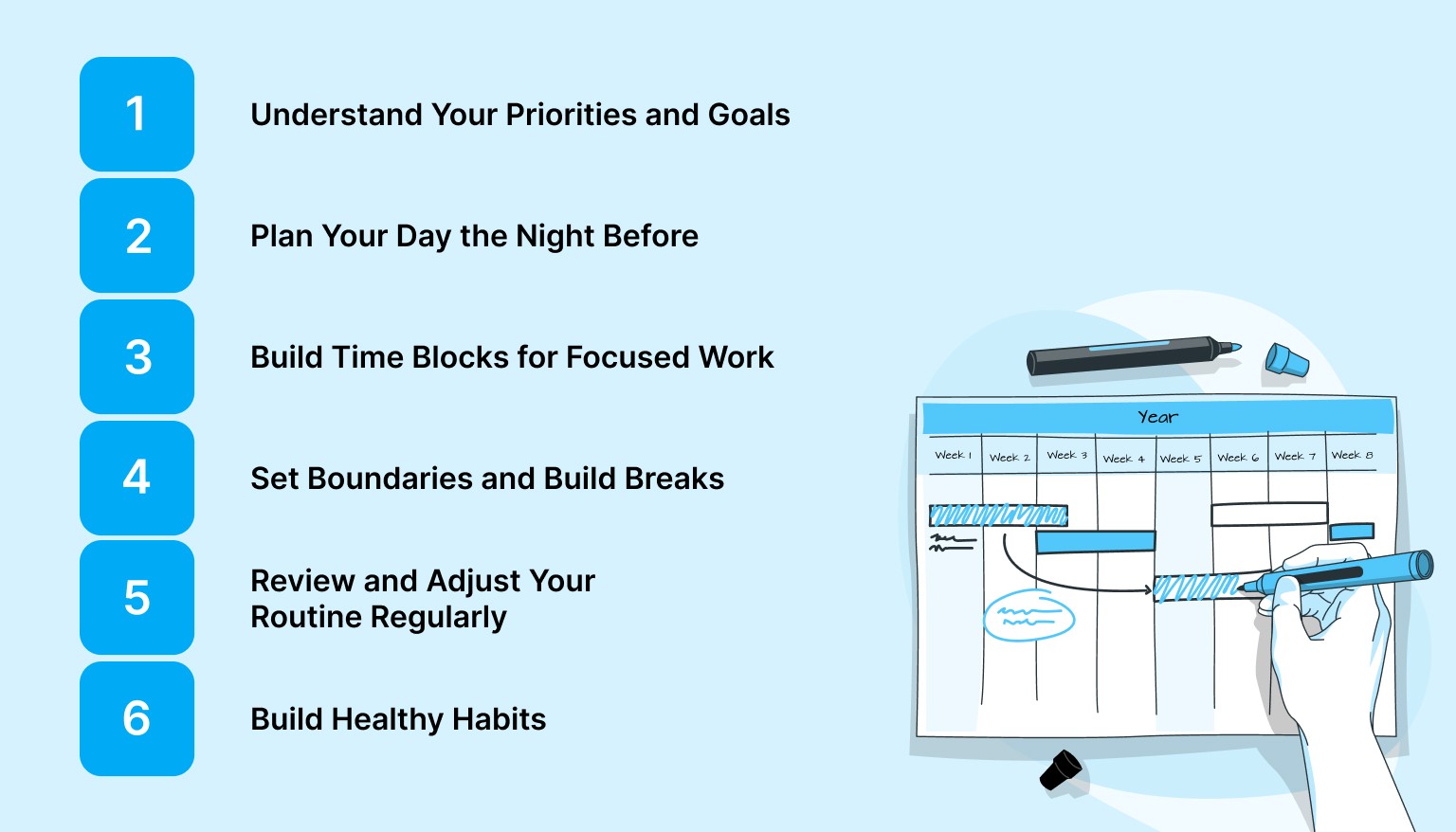
A structured life is the key to achieving greater productivity, reducing stress, and finding balance between personal and professional commitments. In this blog, we’ll explore practical steps to help you organize your time, set clear goals, and build healthy habits that will lead to a more focused and fulfilled life.
Here is how to have a structured life.
Step 1: Understand Your Priorities and Goals
The first step in creating structure is understanding what truly matters to you. Whether it’s personal or professional goals, clarity is key. You can’t build a structure around something if you don’t know where you’re going.
Start by writing down your long-term and short-term goals. Break them down into smaller tasks you can accomplish daily or weekly. Use a task manager or a simple to-do list to help you prioritize and organize your goals. For instance, if your goal is to improve productivity at work, identify high-impact tasks that contribute most toward your goals, and block them on your calendar first.
Step 2: Plan Your Day the Night Before
One of the most effective ways to avoid feeling overwhelmed in the morning is to plan the night before. When you wake up without a plan, you’re forced to make decisions about what to do first, which can cause unnecessary stress.
By planning your day the night before, you give yourself clarity and purpose. Take 10–15 minutes before bed to plan your next day’s priorities and pre-schedule them into your calendar or tool like Akiflow so they become commitments, not wishes. Having a clear list in the morning allows you to hit the ground running without wasting time deciding where to start.
Step 3: Build Time Blocks for Focused Work
Time blocking is a powerful technique for creating structure in your day. It involves setting aside dedicated time for specific tasks, which helps you avoid distractions and stay focused on the task at hand.
Allocate dedicated blocks of time for deep work to focus on high-priority tasks without interruptions. For example, set aside two hours each morning for focused work and avoid checking emails or social media during this time. This ensures you’re spending your time intentionally and are not easily sidetracked.
Also Read: Time Management Tips to Help Team Leaders Lead Smarter
Step 4: Set Boundaries and Build Breaks
Setting boundaries is an essential part of creating structure in your life. Without boundaries, work and personal life can bleed into each other, leading to burnout and stress.
Schedule dedicated focus blocks with ‘do not disturb’ enabled in your task manager and communication tools, minimizing distractions. Additionally, make sure to schedule regular breaks throughout the day to recharge. The Pomodoro Technique is a great method: work for 25 minutes, then take a 5-minute break. This method helps maintain your focus while ensuring you take time for yourself.
Step 5: Review and Adjust Your Routine Regularly
Creating structure isn’t a one-time activity. Life changes, goals evolve, and things don’t always go as planned. Therefore, it’s essential to review and adjust your routine regularly.
Take time at the end of each week to evaluate your progress. What worked well? What didn’t? What can you improve for next week? Regularly reviewing your tasks and goals helps you stay aligned with your priorities and adjust where necessary to stay on track.
Step 6: Build Healthy Habits
A structured life isn’t just about productivity; it’s also about creating habits that support your well-being. Habits like exercising, eating well, and getting enough sleep are essential for maintaining both mental and physical health.
Schedule these habits into your day and treat them with the same importance as work tasks. For example, schedule a 30-minute workout in the morning or set a bedtime reminder to ensure you get enough sleep. You can also use that time for personal growth, like reading or learning Spanish. Building these habits into your routine will help create a healthy, balanced lifestyle.
Habit science suggests that small, repeated behaviors lead to automatic routines over time. Books like Atomic Habits emphasize the power of consistency, making habits part of your daily routine, so they become second nature, driving long-term success and well-being.
Daily Routine Examples for a Structured Life
To illustrate how a structured life can look, here are a couple of practical daily routines that you can adapt to your lifestyle:
Morning Routine
Wake up at 6:00 AM
15-minute meditation or mindfulness session
30-minute exercise (run, yoga, etc.)
15-minute breakfast prep and meal planning
Review goals and schedule for the day
Evening Routine
Review tasks completed and assess progress
Plan for the next day, focusing on high-priority tasks
Prepare a healthy dinner and unwind with a book or a
hobby
Sleep at a set time, ideally by 10:00 PM
This daily structure ensures you start the day with purpose and end it with reflection and preparation for the next.
How Structure at Work Drives Better Performance
Having a structured approach at work isn’t just about managing tasks; it’s about optimizing your entire workflow for efficiency. When work is organized, employees are able to focus more on delivering quality results and less on handling distractions or figuring out what needs to be done next. A clear structure at work can drastically improve productivity, decision-making, and overall job satisfaction.
Let’s explore how structuring your workday leads to better performance:
Optimize Task Management for Better Focus
Without structure, tasks can pile up quickly, creating a sense of chaos and pressure. When you don’t know where to start, it’s easy to become overwhelmed and less productive. But by structuring your tasks and organizing them according to priority, you allow your brain to focus on one thing at a time.
Akiflow helps you manage your time and tasks effortlessly. Give it a try and start creating your perfect routine today. Get started with Akiflow today.
Time Blocking for Efficient Work Sessions
Time blocking is a powerful technique that lets you allocate specific chunks of time to specific tasks. By doing this, you prevent distractions and ensure you’re dedicating enough time to each task. It’s also an effective way to reduce procrastination, as it’s easier to focus when you know exactly how long you have for a task.
Set Boundaries for Maximum Productivity
A lack of boundaries at work often leads to burnout. Without clear limits, it’s easy for work to bleed into personal time, leading to stress and exhaustion. By establishing structured boundaries, such as setting specific work hours and scheduling regular breaks, you can ensure your productivity peaks without sacrificing your well-being.
Regular Reviews for Continuous Improvement
One key aspect of maintaining a structured work routine is periodically reviewing your progress. Regular check-ins on tasks and goals help you see what’s working and where adjustments are needed. It also prevents procrastination by providing a sense of accountability.
Common Mistakes People Make (and How to Avoid Them)
While structuring your life can lead to significant improvements in productivity and well-being, there are some common pitfalls to watch out for.
Here’s how to avoid them:
Over-scheduling: Trying to schedule every minute of the day can lead to burnout. Focus on essential tasks and allow flexibility.
Neglecting Self-Care: Over-committing to work can cause personal needs to fall by the wayside. Balance work with proper rest and personal time.
Inconsistent Review: Not reviewing your routine regularly can lead to stagnation. Regularly evaluate your progress and adjust as needed.
Ignoring Boundaries: Allowing work to bleed into personal time can create stress. Set clear work hours and stick to them.
Lack of Focus on Long-Term Goals: Focusing only on immediate tasks can lead to neglecting your larger vision. Make sure to set aside time for long-term goal planning and stay aligned with your big-picture objectives.
Being Too Rigid: Over-structuring can make your routine feel like a burden. Build in some spontaneity to maintain a sense of freedom and avoid feeling trapped by your schedule.
Failure to Delegate: Trying to do everything yourself can lead to unnecessary stress. Delegate tasks when possible and focus on the most impactful areas of your life and work.
Conclusion
Creating structure in your life doesn’t have to be complicated. With the right strategies in place, you can bring clarity and control to your daily routine, reduce stress, and boost your productivity. Start by understanding your priorities, planning your day, and building time blocks for focused work. Don’t forget to set boundaries, review your progress, and build healthy habits along the way.
Ready to bring more structure to your life? Start today with Akiflow and experience a new level of organization and focus.
FAQs
1. How can I create a structured routine without feeling overwhelmed?
Start small by creating simple daily rituals. Break down larger goals into smaller, manageable tasks, and plan your day the night before.
2. What’s the best way to stay on track with a structured routine?
Consistency is key! Stick to your plan by setting clear priorities, time-blocking for focused work, and regularly reviewing your progress.
3. How can I make sure my work doesn’t bleed into my personal life?
Set clear boundaries by designating “do not disturb” times for deep work. Schedule breaks and personal time, and avoid checking work emails or tasks during your off-hours.
4. How often should I review my progress to maintain structure?
It’s helpful to review your progress at the end of each week. Evaluate what’s working, what isn’t, and adjust your routine as necessary.
5. Can I include self-care in a structured routine?
Treat self-care as a priority by scheduling regular breaks, exercise, and sleep. Building these habits into your routine will help you maintain a balanced lifestyle and support your overall well-being.


